
Home › Newsroom › episodic storytelling
episodic storytelling
Episodic storytelling platforms across film, broadcast, streaming and VR
An episodic storytelling platform is wherever your series is released as connected episodes: broadcast, streaming, VOD, social, VR or your own branded storefront. Here is how the routes compare on who decides, how viewers pay and who keeps the rights, plus the terms to check before you sign.
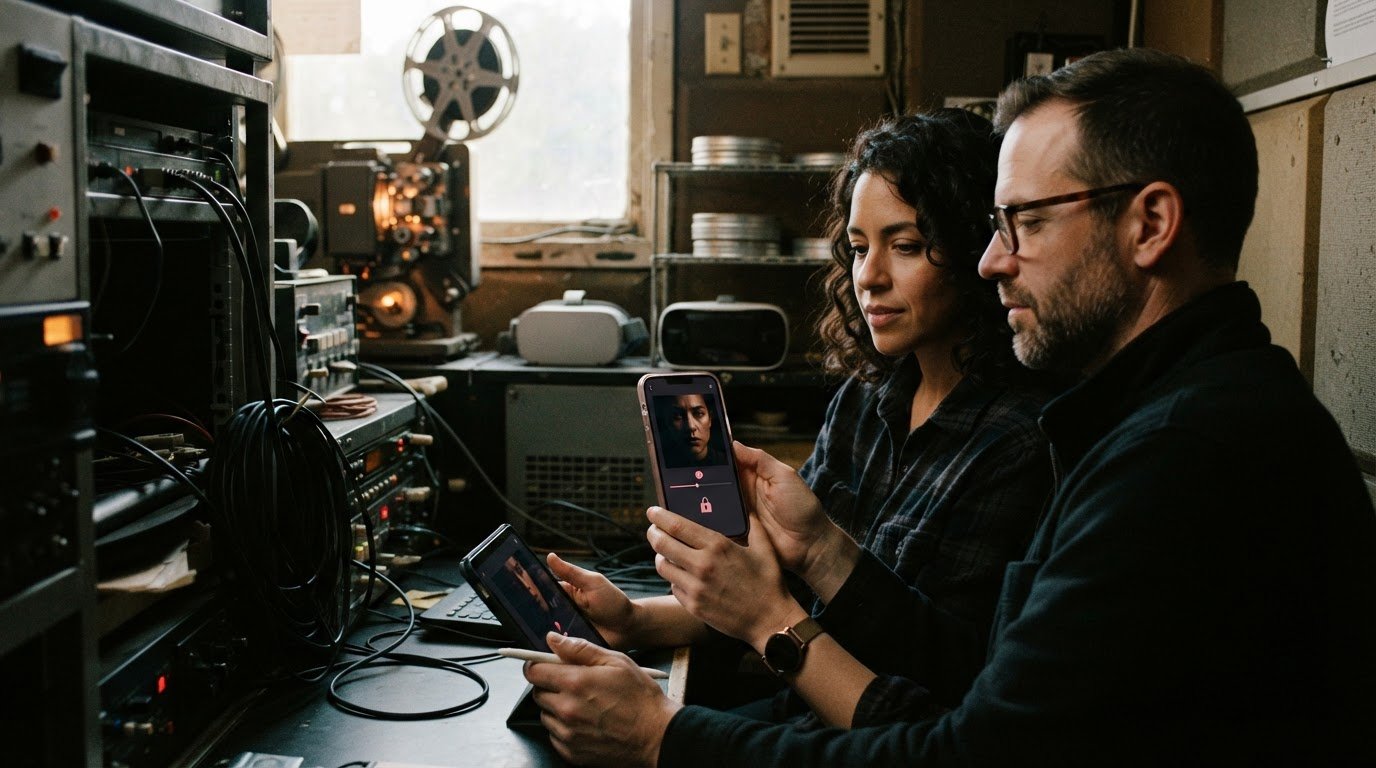
An episodic storytelling platform for filmmakers is any service that lets you release a story as connected episodes and control how viewers reach them: a broadcaster, a subscription streamer, a pay-per-title VOD store, a social platform, a VR store, or your own branded streaming storefront. Each route has a different gatekeeper, payment model and rights deal, so pick it by where your audience watches and what you want to own afterwards. No platform guarantees distribution or viewers on its own.
This guide compares the release routes for an episodic project, from theatrical and broadcast to streaming, VOD, VR and creator-owned storefronts, and lists the terms to check before you sign. It finishes with where a vertical-drama platform such as Dramnex OS fits, and where it does not.
What is an episodic storytelling platform for filmmakers?
It is the place your series lives once it is finished: where episodes are published in order, where viewers find the next one, and where access is free, paid or ad-supported. For filmmakers, the useful features are episode pages with their own titles and descriptions, a clear viewing order, access controls (free episodes, paywalls, subscriptions) and data on where viewers stop watching.
Episodic structure is no longer only for television. ESPN's O.J.: Made in America premiered at the Sundance Film Festival, was released as a five-part miniseries, and later received the Academy Award for Best Documentary Feature. The Sundance Institute runs an Episodic Intensive for series writers. And short vertical series have become a format of their own: YouTube says microdramas passed 6.5 billion views on YouTube in the first half of 2026.
Where can filmmakers publish an episodic series?
There are six main routes. They differ in who decides whether your series goes out, how viewers pay, and who holds the rights afterwards.
| Route | Who decides | How viewers pay | What to check |
|---|---|---|---|
| Theatrical or festival | Festival programmers, distributors | Tickets, later a distribution deal | Premiere rules, sales agent terms |
| Broadcast | The network's programming team | Licence fee from the broadcaster | Delivery specs, exclusivity, term |
| Subscription streaming (SVOD) | The streamer's acquisitions team | Viewers subscribe to the catalogue | Whether it accepts independent submissions at all |
| Transactional VOD (rent or buy) | The store or an aggregator | Pay per title or per season | Revenue share, payout schedule |
| Social and video platforms | Open upload, with eligibility rules for earning | Ads, paid series features, memberships | Monetization thresholds |
| Your own branded storefront | You | Coins, episode unlocks, VIP subscriptions | Platform fee, payment setup, your marketing |
VR is a seventh, specialist route: immersive stores and festivals with their own formats. A VR episode is a different production, not the same cut on a headset, because framing, sound and movement all change.
Can you submit an episodic series to Netflix or another big streamer?
Not directly. Netflix states that it does not accept unsolicited submissions; projects reach it through agents, producers, lawyers or festivals. Other large streamers work in a similar way. Our guide on how to sell a web series to Netflix or another OTT platform covers the routes that do exist.
Where can you upload an episodic series yourself?
YouTube, TikTok and Instagram accept uploads from anyone, and earning depends on each platform's rules. TikTok, for example, lets eligible creators sell a paywalled collection through TikTok Series. Our comparison of where to post a web series sets out the requirements and payouts platform by platform.
How do the platforms compare on reach, monetization and control?
Compare every option on three jobs: finding viewers, collecting money and delivering episodes.
- Reach. A broadcaster brings a scheduled audience and a big streamer brings a catalogue, but both decide whether you get in. An owned storefront has no gatekeeper, and also no built-in audience: you bring the viewers.
- Revenue. Subscription services pay a licence or share of catalogue revenue. Transactional VOD pays per sale. A branded storefront can sell episode unlocks, coin packs or VIP access directly to viewers.
- Control. Check who owns the viewer relationship (emails, accounts), who sets prices, and whether you can see completion and drop-off by episode.
A simple decision order: name the audience you need to reach, pick the payment model that fits how much they will commit, list the features you cannot do without, then weigh that against how much promotion you can do yourself. Reach is not the same as ownership.
What pricing and revenue-share terms should you check?
Platform costs follow the business model, not the episode count. Before you compare percentages, put every option into the same four lines:
| Term | Questions to ask |
|---|---|
| Platform charges | Monthly fees, setup fees, delivery or storage charges, app costs |
| Revenue share | Share of gross or of net? Which deductions? When are payments and reports made? How are refunds handled? |
| Rights and exclusivity | Which episodes, which territories, how long, exclusive or not |
| Exit terms | What happens to your episodes, viewers and unpaid revenue when the agreement ends |
A share of gross receipts is not the same as a share after deductions, so read the definition rather than the headline number. A lower platform fee can come with less control over pricing or viewer data; a pure revenue share can cost little up front but take more from every sale.
What are the rights and production risks to plan for?
Before you publish anywhere, know who owns the underlying work, what licence you are granting, whether it is exclusive or time-limited, and what happens to published episodes if you leave. Treat music, archive footage, contributor releases and platform terms as separate rights questions.
On the production side, a release schedule only works if your crew can sustain it. Finish the season, or most of it, before episode one goes out, and keep your own copies of final masters and project files. A platform can deliver episodes; it cannot fix a weak arc or an uneven production.
Where does Dramnex OS fit for episodic filmmakers?
Dramnex OS is the "own branded storefront" row in the table above, built for short vertical series. You get a branded streaming storefront on your own domain, delivered as a mobile web app that viewers can install as a PWA on iOS and Android (there are no native App Store or Google Play apps), with free episodes as a hook, coin packs, episode unlocks, VIP subscriptions and per-episode analytics.
- Pricing. Creator $49 a month, Starter $149.99, Launch $399 and Studio $999, each plus a 5% platform fee on viewer revenue. See the pricing page.
- Payments. Viewer payments go to your own Stripe account once you connect it. Until then, Dramnex OS collects them and pays you out by Wise, Payoneer, PayPal or bank transfer.
- Done-For-You Launch covers branding, domain, catalogue onboarding and monetization setup. It does not include native app builds.
- For creators: Dramnex OS RISE 100 is a programme for selected filmmakers, AI storytellers and digital creators, with the first two months of the Starter plan covered for those selected.
- For finished series: the content marketplace lets rights holders list series at a fixed price for operators to license, non-exclusively.
It is not a route to theatrical, broadcast or VR distribution, and it does not bring viewers by itself. You can see a live storefront running on Dramnex OS at dramnex.app, and our guide on how to create your own streaming platform covers the launch steps.
How do you choose the right route for your next project?
Decide who the release needs to reach, how viewers will pay for episodes, and what you want to manage directly. Then test the route before committing a whole season to it. If an owned storefront is on your list, start a free 7-day trial with no card to build one with your own episodes (trial storefronts carry a "Made with Dramnexos.com" mark until you pick a plan), or open the self-serve demo, which loads a sample app called CrownShorts. Questions about a specific project can go to the team through the contact page.
FAQ
Frequently asked questions
What is an episodic storytelling platform for filmmakers?
It is a service that publishes a story as connected episodes and controls how viewers reach them: a broadcaster, a streaming service, a VOD store, a social platform or your own branded storefront. Useful features include episode pages with their own titles and descriptions, a clear viewing order, access controls such as free episodes and paywalls, and data on where viewers stop watching.
How do filmmakers use episodic platforms to distribute their work?
They prepare episode titles, descriptions, artwork and a release order, choose an access model (free, subscription, pay per title or episode unlocks), then publish on the route that fits. Open platforms like YouTube or your own storefront take uploads directly; broadcasters and big streamers only take projects through their acquisitions process. A platform delivers the series; it does not secure theatrical or broadcast placement.
What are the best episodic storytelling platforms for independent filmmakers?
It depends on format and control. YouTube and TikTok offer reach with eligibility rules for earning; transactional VOD suits films and seasons sold per title; a branded storefront such as Dramnex OS suits creators who want to sell vertical short-drama episodes directly to their own audience. Projects built for broadcast, theatrical release or VR need routes suited to that format.
Can I submit an episodic series to Netflix?
Not directly. Netflix says it does not accept unsolicited submissions; projects reach it through agents, producers, lawyers or festivals. Independent filmmakers usually start with festivals, transactional VOD, social platforms or their own storefront.
Does Dramnex OS include native iOS and Android apps?
No. Dramnex OS storefronts are branded mobile web apps that viewers can install as a PWA on iOS and Android, with no App Store or Google Play listing. Viewer payments go to your own Stripe account once it is connected; until then Dramnex OS collects and pays out by Wise, Payoneer, PayPal or bank transfer.
Newsroom by email
Get new articles in your inbox
Guides on launching and monetising your vertical-drama business. Confirm your address once, and we’ll email you when a new article is published.
Launch your own
Your own branded streaming app, live in minutes
Dramnexos is the white-label streaming operating system for vertical drama: your brand, your domain, coins, VIP and episode unlocks — with a free storefront to start and a licensing marketplace for finished series.