
Home › Newsroom › vertical drama
vertical drama
Vertical Drama Platform Features Media Companies Need
A vertical drama platform for media companies runs a branded service for short portrait series: phone-first playback, free and paid episodes, coins and VIP plans, payments, catalogue tools and analytics. Here is what to look for, what to ask vendors, and where a white-label platform fits.
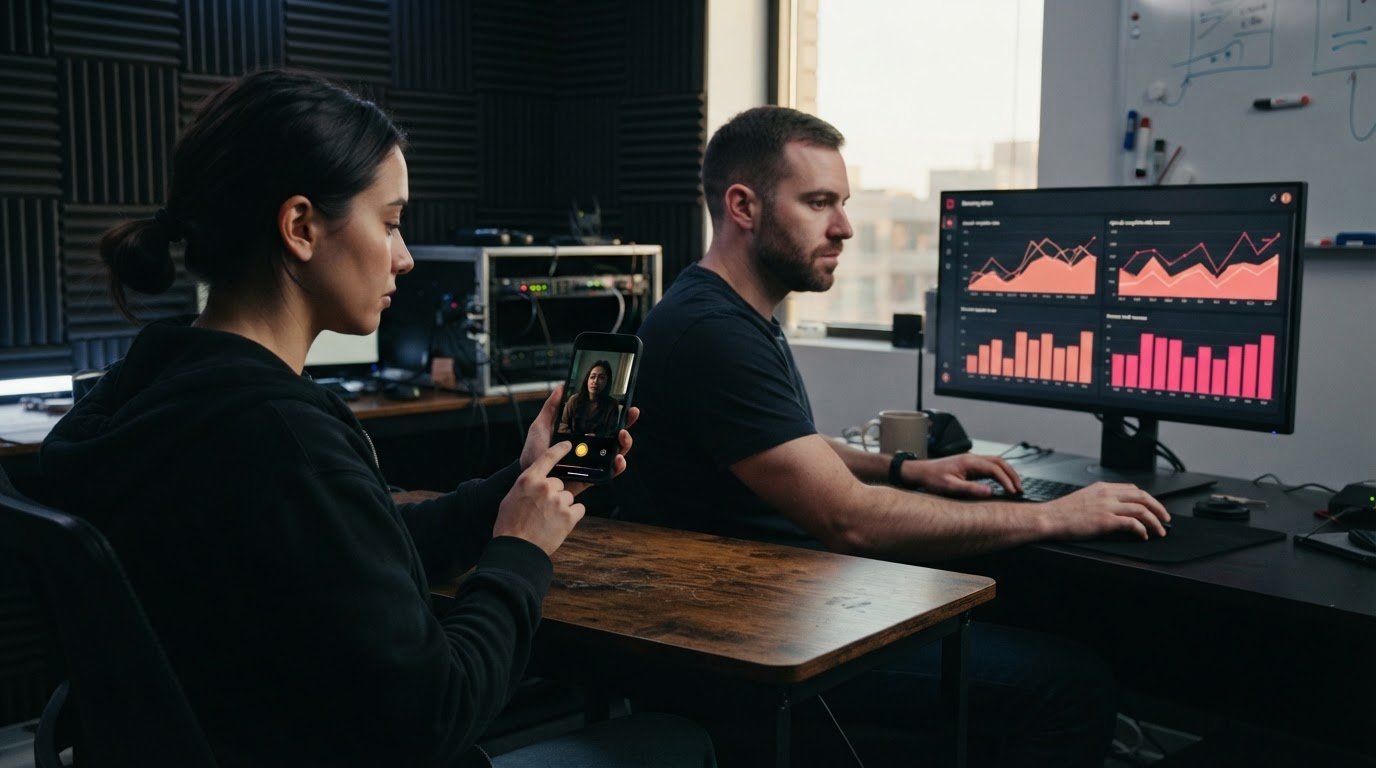
A vertical drama platform for media companies is the software that lets a studio, broadcaster or publisher run its own branded service for short, portrait-format series: a phone-first player, episode-level access (free episodes, coins, VIP plans), payments, a catalogue manager and analytics that connect viewing to revenue. The features that matter most are portrait playback that moves straight into the next episode, flexible monetization per series, data you can export, and an operating workflow your team can run every week. The format is growing fast, but a platform only supplies the infrastructure; content, rights and marketing remain your job.
This guide covers which features to look for, what to ask a vendor, and where a white-label platform such as Dramnex OS fits and where it does not.
What is a vertical drama, and why are media companies paying attention?
A vertical drama (also called a microdrama, short drama or duanju) is a scripted series shot in 9:16 for phones, with episodes of about one to two minutes and a cliffhanger at the end of each. The format grew out of serialized short videos on Chinese platforms such as Douyin, and China's broadcasting regulator recognised it as a distinct genre in 2020. Variety describes typical series of 60 to 100 episodes.
The numbers explain the interest:
| Measure | Figure | Source |
|---|---|---|
| Global microdrama revenue, 2025 | About $11 billion (estimate) | Omdia, Feb 2026 |
| US microdrama revenue, 2026 | $1.5 billion projected, half of all revenue outside China | Omdia, Feb 2026 |
| Short-drama app downloads, Q1 2026 | More than 850 million, up 140% year on year | Sensor Tower |
| Daily time spent in short-drama apps | 25 minutes globally by April 2026 | Sensor Tower |
These are market-level estimates. They do not tell you whether a given series or platform will earn money.
Which features does a vertical drama platform need?
| Feature area | What to look for | Why it matters |
|---|---|---|
| Portrait playback | Full-screen 9:16 player, captions that do not cover faces, autoplay to the next episode | Viewers decide in seconds; friction between episodes loses them |
| Episode access | Free episodes per series, then coins, VIP plans or single unlocks | Lets you test where the paywall sits for each title |
| Payments | Card checkout, clear prices, payouts you can trace | Revenue only counts once it reaches your account |
| Catalogue management | Seasons, episode order, artwork, scheduled releases, roles for staff | Weekly releases need a workflow, not a developer |
| Analytics | Starts, completions, drop-off per episode, unlocks, revenue per series | Shows where viewers stop and what they pay for |
| Data ownership | Export of viewers, purchases and viewing data | Keeps the audience relationship with you |
| Branding and domain | Your name, logo, colours and domain | Builds your brand rather than the vendor's |
What should portrait playback do well?
Start with the image, then place controls around it. Keep play, pause and captions reachable with one hand, and keep dialogue captions clear of the lower controls. When an episode ends, give the cliffhanger a moment before showing the next-episode prompt. Test on several phones and on mobile data, not just office Wi-Fi: open a series, start an episode, pause, resume and continue to the next one.
How should a platform handle episode access and paywalls?
Most short-drama apps follow what the Television Academy calls a freemium model: the first episodes are free, then viewers pay with credits or a subscription to keep watching. Where the paywall sits varies by app and series, so look for a platform that lets you set it per title and change it without a release. The prompt at the lock should explain the price and what the viewer gets in plain words.
Which analytics actually help programming decisions?
Track per-episode starts, completions and exits, then compare them with unlocks and revenue for the same series. A sharp drop right before the paywall points to a pricing or hook problem; a drop mid-series points to the story. Track returning viewers and time between sessions as well, since daily habit is what the format depends on. Treat every metric as a question to investigate, not a verdict: a low unlock rate can come from the episode, the price, payment friction or the audience you bought.
What operational support does a media team need?
Releasing an episode means uploading video, adding a title and artwork, setting access and checking placement. Check that editorial staff can do that, fix a title or reorder episodes without rebuilding a series page, and that finance can see revenue without admin rights over content. Ask the vendor:
- How is launch setup handled, and what do you need from us?
- How do we report a playback or payment issue, and what information speeds it up?
- Can we export viewers, purchases and viewing data at any time?
- Who owns the payment relationship with viewers, and when are we paid?
- What is included in the price, and what is billed per viewer, per GB or per sale?
Rights stay with your team. Contracts for each series should state the territory, term, exclusivity, permitted platforms and revenue share. If you need finished titles, the Dramnex OS content marketplace lists series from rights holders at a fixed price under a standard non-exclusive licence.
Should a media company build, buy source code, or use a white-label platform?
Building your own gives full control but makes your team responsible for video delivery, payments, security and every OS update. Source-code packages cost less upfront but leave hosting and maintenance with you. A white-label platform is hosted and maintained by the vendor; you configure it and pay monthly, accepting its feature set and delivery format. Our buyer's guide to white-label short-drama app builders compares the options, and how to build an app like ReelShort puts costs side by side.
Store apps are a separate decision. Native iOS and Android apps bring App Store and Google Play discovery but add review cycles and store commission on digital purchases; a web app installed to the home screen (PWA) launches faster and takes card payments on the web. See PWA vs native app for a streaming service.
Where does Dramnex OS fit?
Dramnex OS is a white-label vertical drama streaming platform. Each operator gets a branded storefront on its own domain with coins, VIP plans, episode unlocks, free episodes as a hook and per-series analytics.
- Delivery: a branded mobile web app that viewers can install to the home screen as a PWA on iPhone and Android. There are no native iOS or Android apps, no App Store or Google Play listings and no TV apps, and the Done-For-You Launch service does not include native app builds.
- Payments: viewer payments go to your own Stripe account once you connect it. Until then, Dramnex OS collects them and pays you out by Wise, Payoneer, PayPal or bank transfer.
- Pricing: Creator $49 a month, Starter $149.99, Launch $399 and Studio $999, each plus a 10% platform fee on viewer payments. See pricing.
- Catalogue: upload your own series or license finished titles through the content marketplace.
It does not produce series and it does not bring viewers by itself. To test it with your own episodes, start a free 7-day trial, no card needed; trial storefronts show a "Made with Dramnexos.com" mark until you choose a plan. To look around first, open the self-serve demo, which loads a sample app called CrownShorts with its dashboard, coin packs and paywall settings. For a specific project, use the contact page.
FAQ
Frequently asked questions
What is a vertical drama platform for media companies?
It is the software a studio, broadcaster or publisher uses to run its own branded service for short, portrait-format series: a phone-first player, free and paid episodes, coins or VIP plans, payments, a catalogue manager and analytics. It handles distribution; production and rights stay with the media company.
Which features matter most in a vertical drama platform?
Full-screen portrait playback with autoplay to the next episode, per-series control of free episodes and paywalls, card payments with traceable payouts, a catalogue workflow for weekly releases, per-episode analytics tied to revenue, and the ability to export your viewer and purchase data.
How big is the vertical drama market?
Omdia estimates global microdrama revenue reached about $11 billion in 2025 and projects $1.5 billion in the US in 2026. Sensor Tower counted more than 850 million short-drama app downloads in the first quarter of 2026. These are market estimates, not a forecast for any single platform.
How do vertical drama platforms make money?
Mostly from viewers paying to keep watching after free opening episodes, through coins that unlock episodes, VIP subscriptions or single unlocks. Some apps also show ads. Where the paywall sits and how coins are priced vary by app and by series.
Does Dramnex OS provide native iOS and Android apps?
No. Dramnex OS delivers a branded mobile web app that viewers can install to the home screen as a PWA on iPhone and Android. There are no App Store, Google Play or TV app listings, and the Done-For-You Launch does not include native app builds.
Newsroom by email
Get new articles in your inbox
Guides on launching and monetising your vertical-drama business. Confirm your address once, and we’ll email you when a new article is published.
Launch your own
Your own branded streaming app, live in minutes
Dramnexos is the white-label streaming operating system for vertical drama: your brand, your domain, coins, VIP and episode unlocks — with a free storefront to start and a licensing marketplace for finished series.