
guides
Creator-Owned Streaming Platform for Drama Creators
A creator-owned streaming platform lets you distribute dramas under your own brand, set how viewers pay, and keep control of the catalogue and the audience relationship. The support you give contributors, the revenue share, and where people watch all need to be written down before launch.
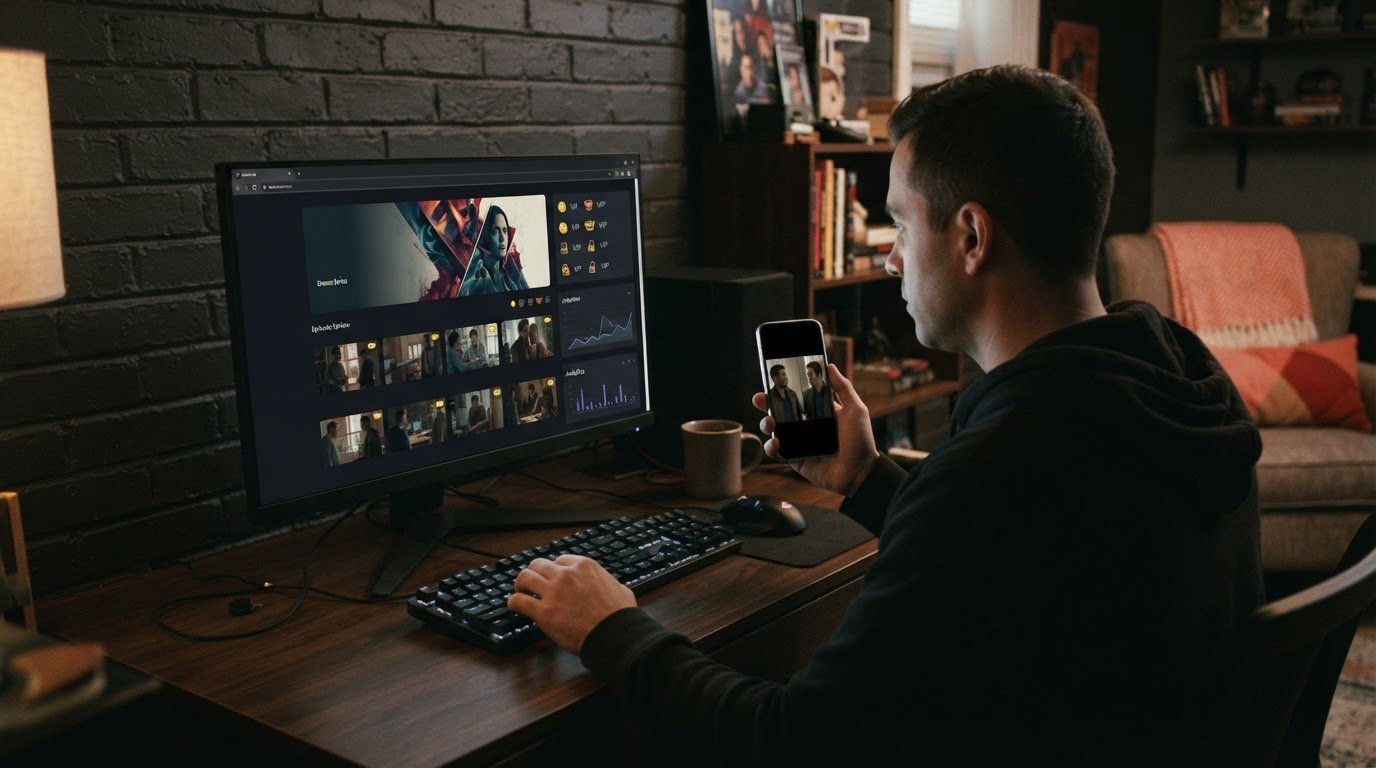
A creator-owned streaming platform lets you distribute dramas under your own brand, set how viewers pay, and keep control of the catalogue and the audience relationship. Ownership is more than a name on an app: the support you give contributors, the revenue share, the plan price, and where people watch all have to be written down. A subscription can make revenue easier to understand, but payout terms and fees matter just as much as the sticker price.
Dramnex OS gives drama creators a branded storefront on the web — installable as a PWA, not a native iOS or Android app — with coins, VIP, episode unlocks and analytics. There is a free 7-day trial with no card. Trial storefronts show a “Made with Dramnexos.com” watermark, which comes off on a paid plan. What a white-label short drama app actually is explains the model in more detail.
Key Takeaways
- Set clear creator support and profit-sharing terms so contributors understand how revenue and responsibilities are handled.
- Assess subscription pricing by the value viewers receive and the revenue model the platform needs to sustain.
- Design app and desktop experiences around how viewers discover, watch, and unlock drama episodes.
- Compare revenue options such as subscriptions, coin packs, VIP tiers, and episode unlocks; Dramnexos brings these tools into a branded streaming platform.
Table of contents
- How should creator support and profit sharing work?
- How should subscription plans and platform pricing be set?
- How should the app and desktop viewing experience work?
- How do creator-owned streaming platforms make money?
- How does Dramnex OS support a creator-owned platform?
- What should you decide before you launch?
How should creator support and profit sharing work?
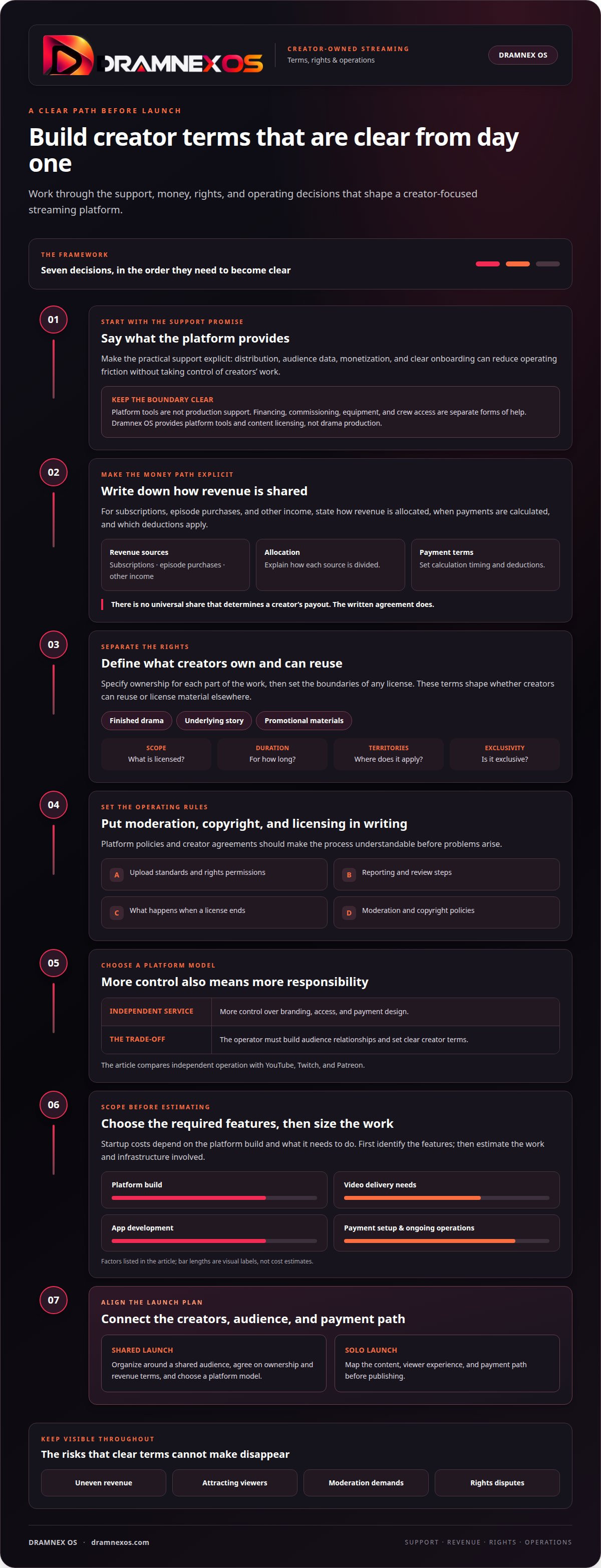
Creator support works when practical help and payment terms are clear. Define what the platform provides, what creators retain, and how revenue gets allocated.
What support do independent creators need?
Independent creators need tools that reduce operating friction without taking control of their work. A creator-owned streaming platform can provide distribution, audience data, monetization, and clear onboarding. Distinguish platform support from production support: financing, commissioning, equipment, and crew access are separate forms of help. For example, Nebula funded the play The Prince, which broke even through ticket sales before opening night. Dramnex OS provides platform tools and content licensing, not drama production.
How should revenue sharing and ownership rights be written?
Revenue share and ownership are separate terms. State how subscriptions, episode purchases, or other income are allocated, when payments are calculated, and which deductions apply. There is no universal share that determines a creator’s payout; the written agreement does. Define ownership of the finished drama, underlying story, and promotional materials, along with licensing scope, duration, territories, and exclusivity. These terms determine what creators can reuse or license elsewhere.
Compared with YouTube, Twitch, and Patreon, an independently operated streaming service gives its operator more control over branding, access, and payment design. That control also means the operator must build audience relationships and set clear creator terms.
Moderation, copyright, and licensing rules should be written into platform policies and creator agreements. Define upload standards, reporting and review steps, rights permissions, and what happens when a license ends.
Startup costs depend on the platform build, video delivery needs, app development, payment setup, and ongoing operations. Choose the required features first; then estimate the work and infrastructure they involve.
To launch or join, creators can organize around a shared audience, agree on ownership and revenue terms, and choose a platform model. For a solo launch, map the content, viewer experience, and payment path before publishing.
Key risks include uneven revenue, the work of attracting viewers, moderation demands, and disputes over rights. Yes, creators in the United States can launch or join streaming platforms; the operating model and agreements shape how each one works.
How should subscription plans and platform pricing be set?
Price the viewing experience around its content, access, and release rhythm. A useful plan makes the value clear before a viewer subscribes.
What belongs in a viewer subscription plan?
Build each subscription around a distinct viewing choice. For example, a drama service could offer a recurring plan for its full catalogue, while reserving a season or early access for a higher tier. Make the differences visible before checkout. State which titles, episodes, and viewing features each plan includes, and explain how viewers can change or end a subscription.
What platform revenue models can a drama service use?
Subscription revenue is only one model. A platform can charge for individual episodes, sell coin packs for unlocking them, or offer VIP access alongside subscriptions. Each option changes how viewers pay and how creators earn. Set the payment rules before launch, then show creators how sales are attributed, what deductions apply, and when payouts are calculated.
Choose a structure that fits the release plan. A weekly serial may suit recurring access because viewers return for new episodes. A limited series could use episode unlocks, letting viewers pay as they watch, while an original premiere might use a one-time purchase. These are possible models, not guaranteed income. Compare each with the viewing experience and the work needed to manage it. Dramnex OS supports coins, VIP memberships, and pay-per-episode access.
Set viewer prices by weighing catalogue depth, release frequency, and access limits. A plan with a small selection of finished dramas offers different value from one with ongoing releases. Avoid adding tiers just to make the menu longer: give each tier a clear purpose, and use analytics to see which titles and access paths viewers choose. Dramnex OS includes analytics to help operators understand viewing and purchases, then refine the offer when the patterns show a mismatch.
Make the payment path easy to understand. Show the renewal terms, included access, and any episode purchase separately. For a practical reference point, review the platform pricing options and consider how a storefront presents paid plans to operators.
Audience scale can inform offer design: Lindsay Ellis had 948K YouTube subscribers, Tom Scott had 2.8 million YouTube subscribers, and Trace Dominguez’s two YouTube channels had about 664,000 and 87,400 subscribers, respectively.
How should the app and desktop viewing experience work?
A drama service needs a clear viewing path on both mobile apps and desktop. Start with the same core journey: discover a series, open its episode page, watch, and continue. On a phone, vertical videos fill the screen and episode controls must stay easy to reach. On desktop, viewers need readable titles, visible navigation, and a player that fits the page.
Design the app around short viewing sessions. Put the next episode near the player, show which episodes are available, and explain any unlock requirement before playback. For example, a locked episode should show its access option before a viewer taps it. Keep descriptions brief, and let artwork and a clear series title help viewers choose without scrolling through a crowded screen. Dramnex OS supports episode unlocks and branded storefronts, giving operators control over how access is presented.
Desktop supports a different task. A viewer may browse a catalogue, compare drama titles, or resume a series after opening another page. Use clear categories and search, then keep episode order visible on the series page. Make playback controls easy to find. A viewer who pauses a video should be able to return to the same title and episode without searching again.
Keep the experience consistent across screens, but don’t force identical layouts. Test the same series page on a phone and desktop. Check that the title, episode list, access details, and playback controls remain clear on both. Then test the full path from discovery to viewing, including what happens after an episode ends. A clear next step can guide viewers to another episode or back to the catalogue.
Use analytics to spot where viewers leave. If a series page gets attention but few viewers start the first episode, review the artwork, description, and visible access terms. If viewers stop after an episode, check whether the next one is easy to find. These signals help refine navigation and presentation. Dramnex OS includes analytics to help operators review activity and purchases, making it easier to improve discovery and continuation across screens.
How do creator-owned streaming platforms make money?
A drama service can earn through recurring subscriptions, episode unlocks, coin packs, VIP access, or licensing deals. The mix matters: subscription income depends on ongoing viewer value, while episode purchases connect payment to specific titles. Licensing creates revenue through access to a finished series. Each model needs clear accounting so operators can track sales and calculate creator payments. Dramnex OS supports coins, VIP memberships, episode unlocks, and licensing through its marketplace.
Map the money flow before launch. Record each payment by title and transaction type, then separate platform revenue from creator earnings. For example, an episode unlock should connect to the series, episode, and creator in your reporting. Document processing deductions, refunds, and any agreed platform share. Dramnex OS’s earnings dashboard shows gross sales, fees, refunds, and payouts; viewer payments go to the operator’s own Stripe account once it is connected (until then, Dramnex OS can collect them and pay out by Wise, Payoneer, PayPal or bank transfer), and the operator owns and can export audience data at any time.
Licensing can add another revenue path. An operator licenses a finished short drama from a studio or creator, then earns through viewer access. The license agreement should state the titles covered, usage scope, and payment terms. Dramnex OS’s licensing marketplace connects operators seeking finished series with studios and independent creators listing titles. Suppliers can receive payment per deal, while operators choose content for their catalogues.
Use analytics to evaluate whether a model works. Compare episode starts, unlocks, subscription activity, and repeat viewing by title. If viewers watch a drama but rarely unlock its next episode, review the access path and episode sequence. If one title drives repeat visits, consider how its release schedule supports ongoing engagement. Treat each signal as a decision input, not proof of guaranteed revenue. Dramnex OS includes analytics to help operators examine these patterns.
Choose revenue tools that fit your catalogue and operating plan. Explore a branded drama streaming setup to see how operators can combine viewer payments, content access, and analytics.
How does Dramnex OS support a creator-owned platform?
Dramnex OS is a white-label vertical-drama streaming platform for operators who want a branded service they control. Viewers get a branded web app they can install from the browser as a PWA. Dramnex OS does not provide native iOS or Android apps, and it does not list apps on the App Store or Google Play. The storefront can run on your own domain on a paid plan.
There is a free 7-day trial with no card. Trial storefronts show a “Made with Dramnexos.com” watermark, which comes off on a paid plan. Plans are Creator at $49/month, Starter at $149.99/month, Launch at $399/month and Studio at $999/month, plus a 5% platform fee on collected viewer payments (0% during the trial). See current pricing. Viewer payments go to the operator’s Stripe account once Stripe is connected. Until then, Dramnex OS can collect payments and pay out by Wise (including to a Pakistani bank in PKR), Payoneer, PayPal, or bank transfer. Stripe’s processing fee is separate.
The content marketplace connects operators seeking finished series with studios and creators who list titles for deal-based payment. Dramnexos RISE 100 offers selected filmmakers, AI storytellers and digital creators two months of Starter access at no charge, after which they can stay on Starter, change plan, or cancel. These tools do not replace writing, filming or producing a series.
Open the self-serve demo or start the free trial when you want to test the storefront with your own catalogue.
What should you decide before you launch?
A creator-owned platform becomes a real business when the operating model matches the dramas you want to release and the audience you want to serve. Decide what to launch first, who will supply the series, and how viewers will access them. Then shape the platform around those choices, with creator terms and the viewer experience clear from day one.
Related reading
FAQ
Frequently asked questions
What is a creator-owned streaming platform?
A creator-owned streaming platform lets an operator distribute video under its own brand and control its business model. For drama creators, that can mean managing a catalogue, choosing episode access, and deciding how viewers pay — subscriptions, coins, unlocks or VIP.
What are typical subscription prices and fees for independent streaming services?
There is no single typical viewer price. Compare the full platform structure, including any platform fee on viewer revenue and payment-processing charges. Dramnex OS plans are Creator at $49/month, Starter at $149.99/month, Launch at $399/month and Studio at $999/month, plus a 5% platform fee (0% on the free 7-day trial).
Where do viewer payments go?
On Dramnex OS, viewer payments go to the operator’s Stripe account once Stripe is connected. Until then, Dramnex OS can collect payments and pay out by Wise (including to a Pakistani bank in PKR), Payoneer, PayPal or bank transfer. Stripe’s processing fee is separate from the 5% platform fee.
Do I need native iOS and Android apps?
No. Viewers can use a branded web app and install it from the browser as a PWA. Dramnex OS does not provide native iOS or Android apps or app-store listings.
What content moderation, copyright, and licensing rules apply?
Write moderation, copyright and licensing rules into platform policies and creator agreements. Define upload standards, reporting and review steps, rights permissions, and what happens when a licence ends.
Newsroom by email
Get new articles in your inbox
Guides on launching and monetising your vertical-drama business. Confirm your address once, and we’ll email you when a new article is published.
Launch your own
Your own branded streaming app, live in minutes
Dramnexos is the white-label streaming operating system for vertical drama: your brand, your domain, coins, VIP and episode unlocks — with a free storefront to start and a licensing marketplace for finished series.