
guides
Vertical Drama Creator Program for Episodic Micro-Dramas
You can turn an original story, script or novel into episodic micro-dramas if you control the rights or have permission to adapt them. A creator program can help structure that work for 9:16 episodes of about one to two minutes, but you still need a hook, a change in each episode, and a clear release plan.
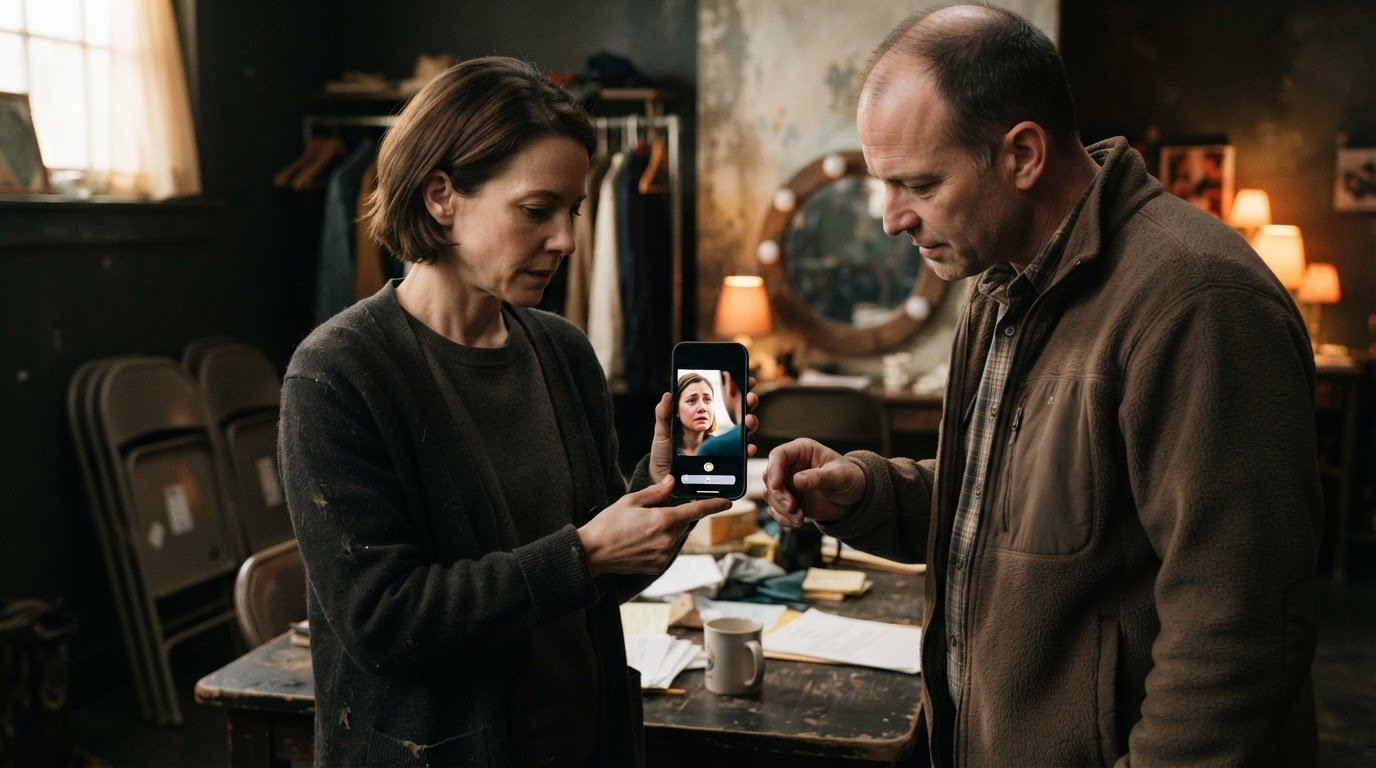
Yes, you can turn an original story, script or novel chapters into episodic micro-dramas, provided you control the rights or have permission to adapt them. A vertical drama creator program can help structure that work for short, serialized viewing, with episodes designed for a 9:16 frame and often running one to two minutes. The format is compact, but the story still needs a clear hook, a change in each episode, and a reason to keep watching.
This guide covers how to shape a premise into episodes, plan production, and weigh distribution and monetization. If you already have finished episodes, you can test them on your own branded web app with Dramnex OS — a free 7-day trial, no card — or look at Dramnexos RISE 100 if you want supported Starter access. For production budgets, see how much it costs to make a vertical drama.
Key Takeaways
- Compare direct episode unlocks, VIP access, and licensing to find a revenue route that fits your release plan.
- Build a production budget around the full workflow, then define minimum viable, target, and protected versions before committing.
- Test your opening episodes for clarity and momentum, then use viewer behavior to guide what you refine.
- Creators, studios, writers, and brands can use different paths to develop, distribute, or monetize short-form drama.
Table of contents
- How do you turn a story, script or novel into a vertical drama?
- How can vertical drama creators monetize a series?
- What should new creators prepare first?
- How can creators, studios, writers and brands use a program?
- How does Dramnex OS support vertical drama creators?
- What is a practical next step for your story?
How do you turn a story, script or novel into a vertical drama?
Start with the central conflict, then rebuild the story around short, repeatable turns. A novel chapter may contain several scenes; a vertical episode needs a clear shift that pushes the character toward a new problem. Keep the original emotional engine, but cut scenes that neither change the stakes nor build momentum.
For content and format, plan episodes that run 1-2 minutes and frame the action for vertical viewing. Each episode needs a setup, a change, and an unresolved consequence. Apps commonly need dozens of episodes, so map the story’s turning points before writing every scene. A romance, for example, might end an episode with a confession interrupted by a rival’s arrival.
- Extract the engine. Write down the protagonist’s goal, the main obstacle, and the emotional fantasy driving the story. Choose one central trope to keep the series focused.
- Build episode turns. Divide the plot into escalating beats. Give each beat a visible change, then end on a consequence viewers want resolved.
- Draft for the frame. Write scenes that read clearly in a 9:16 image. Use dialogue and action to reveal conflict without lengthy explanation.
Before production, price three budget versions: minimum viable, target, and protected. Account for development, cast, locations, crew, equipment, art, post-production, music, insurance, legal costs, and contingency. These categories reveal trade-offs early. If a location becomes too costly, for example, simplify the setting without losing the key confrontation.
Distribution deals carry their own risks. Compare rights, exclusivity, territories, term, recoupment, reporting access, and marketing obligations before signing. Exclusivity can limit where or how you release the story, while unclear reporting terms make performance harder to assess. Compare each deal point with your release plan, noting which rights you grant, for how long, and in which territories.
After release, track episode completion, paywall drop-off, return rate, acquisition cost, conversion, refund signals, and revenue by cohort. Use these signals to find weak transitions or paywall friction, then adjust future episodes or release decisions.
How can vertical drama creators monetize a series?
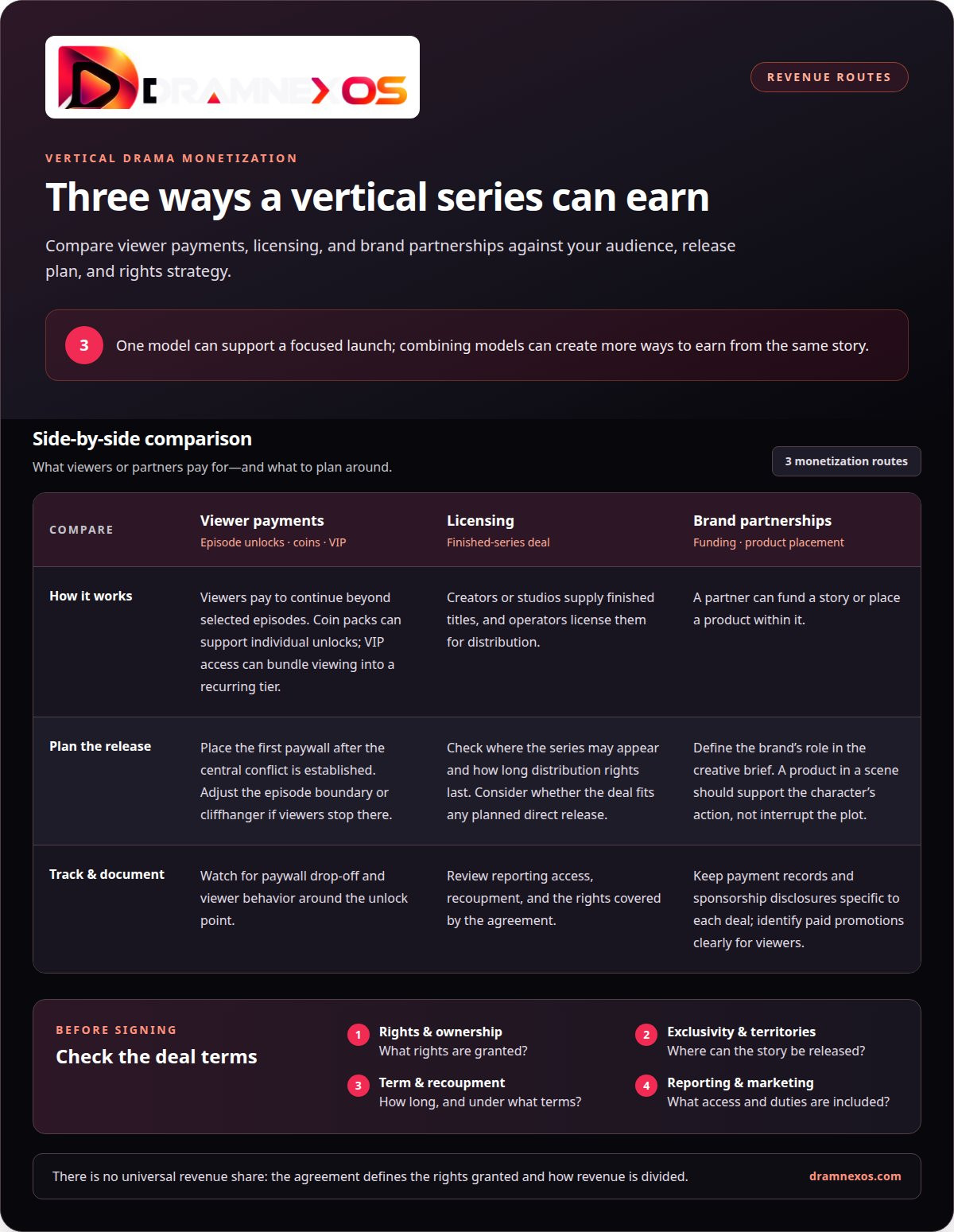
A vertical series can earn through viewer payments, licensing, or brand partnerships. Choose a route that fits your audience, release plan, and rights strategy. One model can support a focused launch; combining models can open more ways to earn from the same story.
Episode unlocks let viewers pay to continue beyond selected episodes. Place the first paywall after the story establishes its central conflict. Track where viewers stop, then adjust the episode boundary or cliffhanger. Coin packs can support individual unlocks, while VIP access can bundle viewing into a recurring tier. These options give operators different ways to structure access.
Licensing gives operators access to finished series through a deal. Creators or studios supply titles, which operators license for distribution. Review the rights covered, where the series may appear, and how long those rights last. Match the agreement to your release plan, especially if you also intend to distribute directly.
Brand partnerships can fund a story or place a product within it. Define the brand’s role in the creative brief. A product woven into a scene should support the character’s action, not interrupt the plot. Keep payment records and sponsorship disclosures specific to each deal. Track revenue by source and clearly identify paid promotions for viewers.
Are there tax, disclosure, or other U.S. legal requirements for creators? Tax handling and promotional disclosures depend on the income and arrangement. Track receipts, contract terms, and paid integrations so each deal is documented clearly.
What rights and revenue share do creators give up when joining? There’s no universal revenue share. The agreement defines the rights granted and how revenue is divided, so review ownership, exclusivity, territories, term, recoupment, reporting, and marketing duties before signing.
Compare routes by control, workload, and revenue reporting. If you want direct access to viewers, include platform plan options in your distribution planning.
What should new creators prepare first?
Start with a focused premise, then prepare a concise package that shows its screen potential. A compelling opening can make the project easier to assess.
What should you know about budgets, tools and program support?
Compare what each program funds, which tools it supplies, and what its support covers. Distinguish production funding from script feedback, production coordination, and release setup: these are different forms of help. Build a workable plan around the resources offered, then identify what your team must cover. Test the opening episodes without explanation to see whether viewers can follow the story.
Who is eligible for a creator program?
Eligibility depends on each program’s stated criteria. Match your application to its intended participants and project stage. A filmmaker might submit a finished short-drama concept, while a writer could present an adaptation plan and sample script. State your role, the story’s current status, and what support you’re seeking. If the program targets specific creator types, address that fit directly.
How does the application process work?
Prepare a concise application package before submitting through the program’s stated route. Include a premise, sample script, visual reference, and brief series-development plan. Clarify the project’s status and your role. Keep the opening episodes focused on one emotional hook and a clear reason to continue. Use readable captions in any sample video.
What happens after approval and onboarding?
Approval and onboarding timelines depend on the program’s review and setup steps. Review may involve assessing project fit, sample materials, and readiness; onboarding may depend on access setup and the information required to begin. Have your script, project details, and account information ready. Once accepted, confirm the first deliverable and its format, then plan your work around that milestone.
How can creators, studios, writers and brands use a program?
Each group brings a different asset: a story, catalogue, script, or audience. Set the project’s owner and intended release path before development begins.
How can independent creators use a program?
A filmmaker can use a creator program to develop an original short-drama concept and prepare it for release. Start with the premise, sample scenes, and a clear statement of your role. For example, a creator adapting their own story should identify which characters and plot turns carry the series. Distinguish creative control, production responsibilities, and distribution plans in the proposal.
How can studios use a vertical-drama program?
A studio can extend its catalogue into episodic mobile viewing with vertical drama. Select a finished title with a clear central conflict, then identify scenes that can drive short installments. A studio with several finished series can also consider licensing titles to operators. Keep each project’s title metadata, rights information, and approved promotional materials together.
How can writers use a vertical-drama program?
Writers can adapt a novel chapter, screenplay, or original premise into a vertical series. First, identify who controls the underlying rights. Then turn the main plot into a sequence of visual decisions, not a compressed summary. A writer adapting a mystery, for instance, can end a scene with a clue that changes the suspect list. Present the adaptation plan alongside a sample script.
How can brands use a vertical-drama program?
A brand can commission a story that fits its audience without turning every scene into an advertisement. Define the audience, product role, and creative boundaries before drafting. For example, a travel brand might support a relationship drama set around a missed departure. Agree on how the brand or product appears, who approves the placement, and how paid promotion is disclosed.
For all four groups, make ownership, permissions, and release responsibilities explicit. Decide who can publish the finished episodes, who controls later adaptations, and how the project will reach its intended audience. This clarity helps creators build a release plan around the asset they actually control.
How does Dramnex OS support vertical drama creators?
Dramnex OS does not produce or edit your dramas. It gives creators and operators a route from finished episodes to a branded streaming storefront, with coins, VIP, episode unlocks and analytics. Viewers get a branded web app they can install from the browser as a PWA. Dramnex OS does not provide native iOS or Android apps, and it does not list apps on the App Store or Google Play. There is a free 7-day trial with no card. Trial storefronts show a “Made with Dramnexos.com” watermark, which comes off on a paid plan. Plans are Creator at $49/month, Starter at $149.99/month, Launch at $399/month and Studio at $999/month, plus a 5% platform fee on collected viewer payments (0% during the trial). See current pricing. Viewer payments go to the operator’s Stripe account once Stripe is connected. Until then, Dramnex OS can collect payments and pay out by Wise (including to a Pakistani bank in PKR), Payoneer, PayPal, or bank transfer. Stripe’s processing fee is separate.
Dramnexos RISE 100 offers selected filmmakers, AI storytellers and digital creators two months of Starter access at no charge, after which they can stay on Starter, change plan, or cancel. If you already have finished series, the content marketplace is where operators license titles and suppliers list them.
Open the self-serve demo to see the viewer experience, or start the free trial to put your own episodes in front of an audience.
What is a practical next step for your story?
A creator program can support selected people getting started; an independent release still needs a platform and a clear rights plan. Decide whether you need development help, a place to license finished work, or a storefront you operate yourself, then choose the path that matches that next step.
Related reading
FAQ
Frequently asked questions
Can I make episodic micro-dramas from an existing story?
Yes, if you control the source material or have permission to adapt it. Start with a story you can divide into clear, connected episodes, then write a beat sheet that shows each episode’s main action and the reason to continue.
Can I use the dramas commercially?
Yes, if you own or have secured the rights needed for commercial distribution. Check the full chain of rights, not just the script: source material, music, performances, locations and recognizable brands can each need their own clearance.
What is a vertical drama creator program?
A vertical drama creator program is a structured route for developing or distributing episodic stories made for vertical viewing. Programs vary, so separate creative support from platform access. Dramnexos RISE 100, for example, offers selected filmmakers, AI storytellers and digital creators two months of Starter access at no charge.
How much do vertical drama programs pay creators?
There is no standard payout across programs. Earnings depend on the written agreement and the revenue route, such as licensing, episode unlocks or VIP access. Read eligibility and participation terms before you apply, and do not assume a revenue share you have not been offered in writing.
Does Dramnex OS produce my series for me?
No. Dramnex OS provides the branded streaming storefront, monetization tools and, for selected creators, supported Starter access through Dramnexos RISE 100. It does not write, film or edit your dramas.
Newsroom by email
Get new articles in your inbox
Guides on launching and monetising your vertical-drama business. Confirm your address once, and we’ll email you when a new article is published.
Launch your own
Your own branded streaming app, live in minutes
Dramnexos is the white-label streaming operating system for vertical drama: your brand, your domain, coins, VIP and episode unlocks — with a free storefront to start and a licensing marketplace for finished series.