
guides
How to Build a Short Drama App with Coin Monetization
A short drama streaming app builder lets you launch a branded storefront with coin unlocks, VIP plans, ads and video delivery. The work is less about a store listing and more about episode pricing, catalogue refresh, delivery costs and a payment path you can operate.
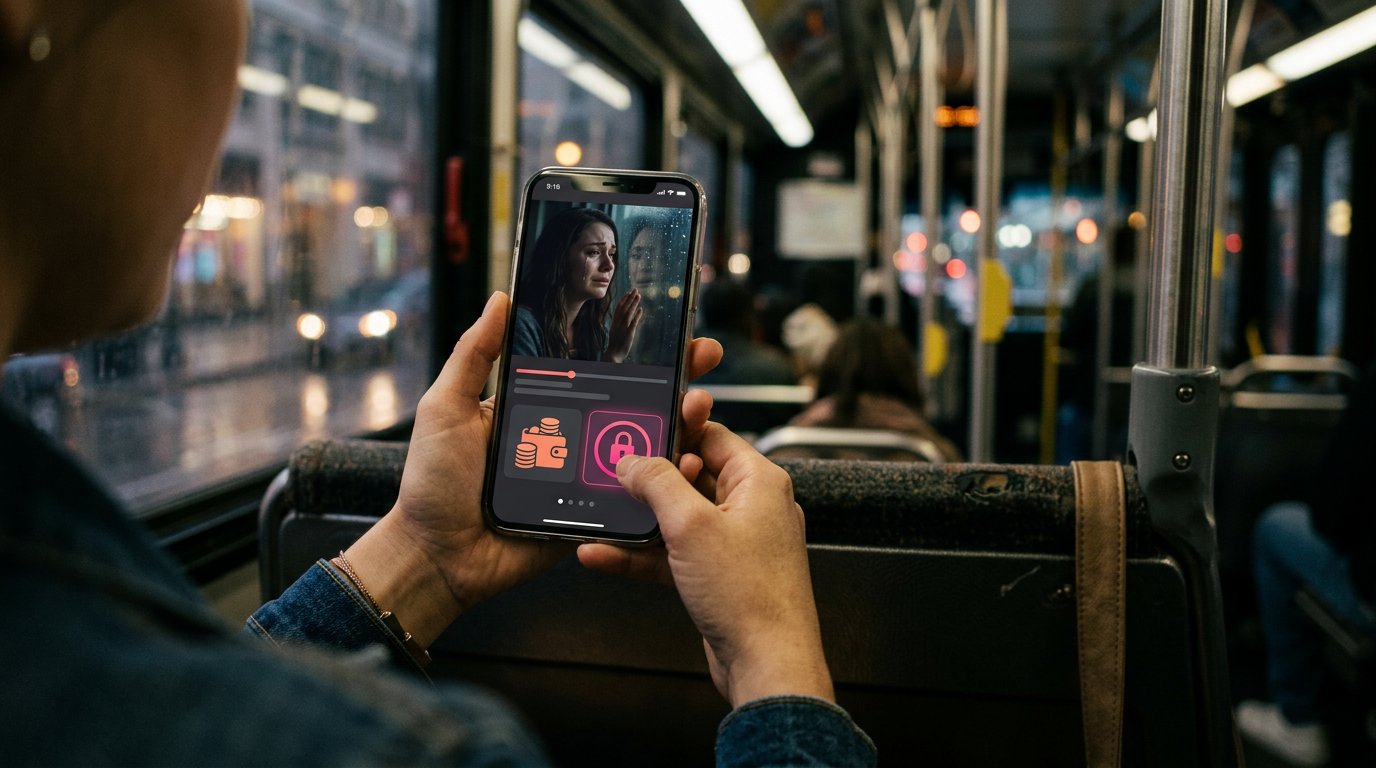
A short drama streaming app builder lets you launch a branded storefront with coin unlocks, VIP plans, ads, and video delivery, without writing a native iOS or Android app from scratch. The work is less about a download listing and more about episode pricing, catalogue refresh, delivery costs, and a payment path you can actually operate. This guide covers coin wallets, operating costs, and the choice between a custom build and a white-label platform such as Dramnex OS, which viewers install from the browser as a PWA.
You can start a free 7-day trial, no card or try the self-serve demo. For pricing design, see vertical drama coin pricing. For the general model, see how coin-based streaming apps make money.
Key Takeaways
- Design coin packs and episode unlocks as one clear viewer journey, with access rules that are easy to understand.
- Separate video delivery from content and marketing budgets so ongoing operating needs don’t get lost in launch planning.
- Compare custom development and white-label options by the control, time, and operating work each one requires.
- Assess the opportunity through audience habits and a catalog that keeps giving viewers a reason to return.
Table of contents
- How do episode unlocks and coin wallets work?
- What do content delivery and ongoing operating costs include?
- Should you choose custom development or a white-label platform?
- What is the market opportunity for DramaBox-like apps?
- How Dramnex OS supports a coin-based short drama app
How do episode unlocks and coin wallets work?
- Map each series into free previews and paid episodes before setting unlock rules. For example, let viewers watch the opening episode, then unlock later episodes with coins. Short drama episodes may run 60-120 seconds, so place the unlock at a clear story beat. Keep the next action visible without interrupting playback at a confusing moment.
- Keep the coin wallet simple. Show the balance, the episode’s unlock cost, and the remaining balance before viewers confirm. Record purchases and episode unlocks against the same account. That gives viewers a clear transaction history and helps operators trace a balance if a purchase or access issue arises.
- Present subscriptions as a separate option, not a hidden replacement for coins. A VIP membership can provide access to a defined catalog or viewing tier, while coins unlock selected episodes individually. Explain the difference on the series page. Digital goods sold inside apps, including coins and subscriptions, may also be subject to Apple and Google’s in-app purchase requirements.
- Treat advertising as another monetization option, with a clear choice for viewers. For example, a rewarded ad could unlock one episode, while a coin purchase provides direct access. Explain the offer and outcome before playback. Then review how ads, subscriptions, and coin unlocks work together. Too many competing prompts can make a series harder to follow.
- Set these rules before adding catalog content. Configure the free preview, unlock requirement, subscription access, and ad option for each episode. Test a series as both a new and a returning viewer. After an unlock, confirm that progress, wallet balance, and access update together, so the next episode works as expected across sessions.
What do content delivery and ongoing operating costs include?
Plan video delivery, episode releases, and content rights as separate areas of work. Smooth playback depends on both the delivery setup and a reliable content pipeline.
-
How should you plan the content pipeline and refresh cadence?
Build a release calendar around complete series, not isolated uploads. For each title, map the episode order, release dates, and next episode viewers should watch. Set an update schedule before launch so the catalog has a clear release plan. Separate content sourcing from production: licensing finished series and producing original video involve different workflows, budgets, and timelines.
Keep a ready-to-publish queue. If an episode is delayed, use the queue to maintain planned updates without promising more than the production pipeline can deliver.
-
How should you manage content and episode analytics?
Organize each series with its episode files, artwork, descriptions, release status, and license details. Then review viewing at the episode level: starts, completions, drop-off points, and transitions to the next episode. Repeated exits at one episode, for example, may point to a pacing or playback issue rather than a problem with the series as a whole.
Test the player along the actual release path. Confirm that playback resumes correctly and the next episode appears after viewing. Use analytics to guide scheduling and catalog decisions, but review the episode itself too.
-
What content protection and operating requirements should you address?
Check that you have the necessary rights before streaming a drama in the United States. A license should define permitted distribution, territories, term, and any limits on promotional use. Treat security, privacy disclosures, and app-store review as launch requirements: protect accounts and payment data, explain data practices, and follow each store’s submission policies.
Budget video delivery separately from production and marketing. Actual operating needs depend on viewing volume, video quality, catalog size, and how efficiently the setup serves each stream. Consider these factors alongside licensing and plans to refresh the catalog.
Should you choose custom development or a white-label platform?
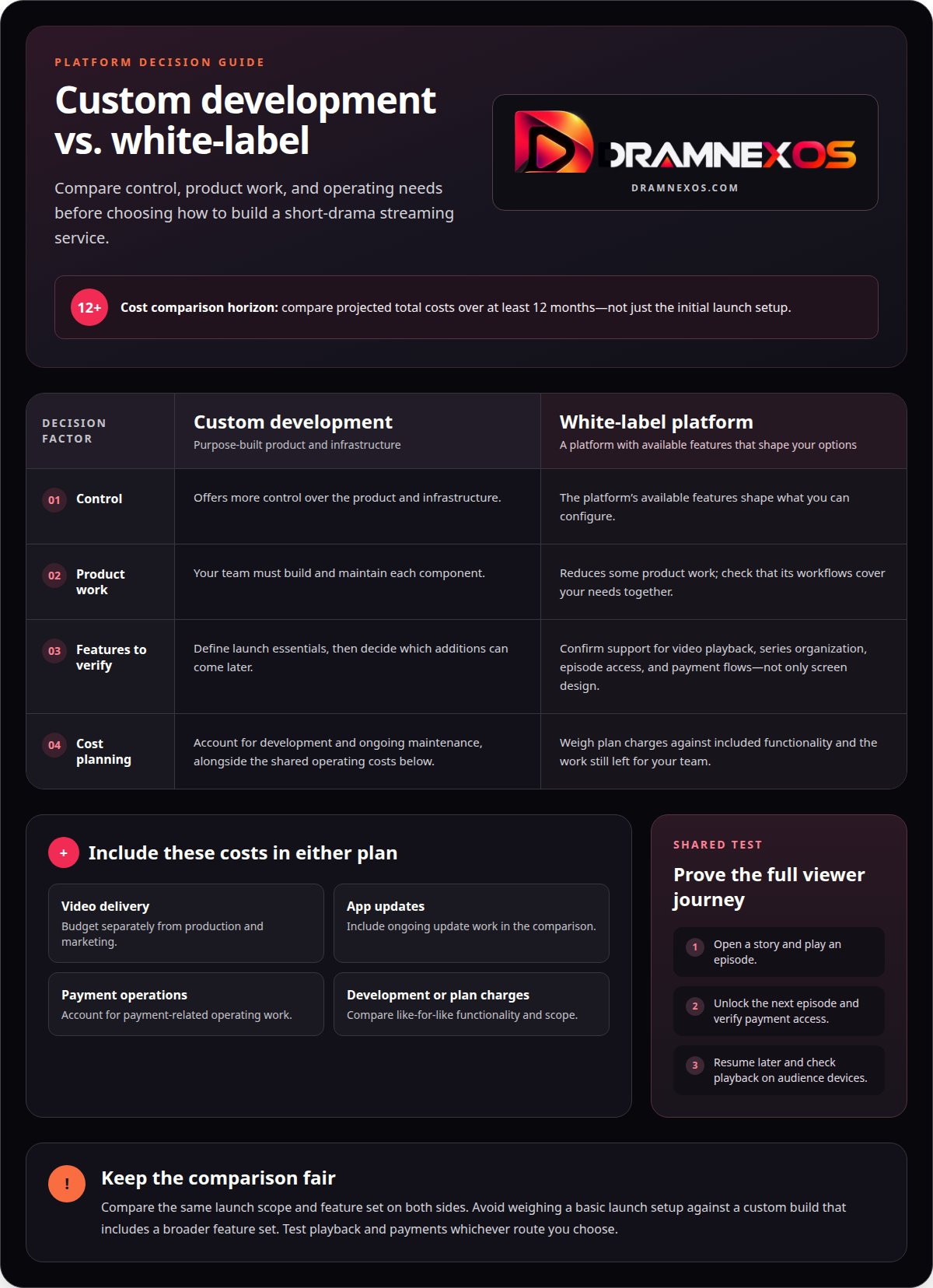
No-code app builders can assemble prototypes, but a production service also needs video streaming, playback, payments, and episode access. Choose between a purpose-built platform and custom development based on the control you need, your audience, and your infrastructure requirements.
-
What should you review in a no-code platform?
First, distinguish general no-code app builders from white-label streaming platforms. General builders can help shape screens and test navigation, but a short-drama service also needs video playback, series organization, episode access, and payment flows. Check whether the platform supports those workflows together, rather than choosing on the strength of a polished preview.
Map the viewer journey before committing: open a story, play an episode, unlock the next one, and resume later. If key steps depend on disconnected tools or manual work, operating the service may become more demanding as the catalog grows.
-
How should you assess development timelines and costs?
List the features you need at launch, then separate essentials from later additions. Custom development offers more control over the product and infrastructure, but your team must build and maintain each component. A white-label platform reduces some of that product work, while its available features shape your options. Either way, test playback and payments.
Compare projected total costs over at least 12 months. Include development or plan charges, ongoing maintenance, video delivery, app updates, and payment operations. Plan pricing should be weighed against included functionality and the work still left for your team. Avoid comparing a basic launch setup with a custom build that includes a broader feature set.
-
What does the app development process look like?
Set the scope, prepare the stories and episode metadata, configure the viewing experience, then test the full release path. Check playback on the devices your audience uses and confirm that access changes after payment. A short drama streaming app builder should suit viewers’ habits without adding unnecessary infrastructure decisions.
Custom development involves decisions about design, implementation, and maintenance. A white-label platform provides an existing product foundation. Choose the route that fits your control requirements, launch scope, and capacity to manage updates.
What is the market opportunity for DramaBox-like apps?
- Define your audience before treating market opportunity as a launch plan. A DramaBox-like app is a business model to test, not proof that another catalog will attract viewers. Choose a clear audience and story category, such as romance, suspense, or family drama. Then shape series pages, episode previews, and unlocks around how those viewers decide to keep watching.
- Build the revenue model around repeat viewing, not downloads alone. Coin unlocks monetize individual episodes; subscriptions can offer broader access; ads can provide another route. Each option suits different viewing behavior. Someone sampling one series may prefer a single-episode unlock, while a committed viewer may choose a subscription. Make the options clear and measure which path keeps viewers watching.
- Compare the cost to build with the work required after launch. A finished app still needs licensed stories or original production, catalog updates, video delivery, and ongoing operations. A focused catalog and one clear monetization path can keep the first release manageable. Expand when viewing patterns show where more series or features could improve the experience.
- Use a focused release to test demand before scaling the catalog. Track episode completion, return viewing, unlocks, and subscription activity by series. If viewers start a story but leave before the next episode, review the story flow and release sequence before adding titles. Use those observations to guide operations rather than relying on assumptions about market opportunity.
- Keep control of the audience relationship as the app grows. A branded platform can give operators ownership of the viewing experience, while a licensing route can help source finished series instead of relying only on original production. Plan your branded drama app launch around the content and monetization model you intend to operate.
How Dramnex OS supports a coin-based short drama app
Viewers get a branded web app they can install from the browser as a PWA. Dramnex OS does not provide native iOS or Android apps, and it does not list apps on the App Store or Google Play. There is a free 7-day trial with no card. Trial storefronts show a “Made with Dramnexos.com” watermark, which comes off on a paid plan. Plans are Creator at $49/month, Starter at $149.99/month, Launch at $399/month and Studio at $999/month, plus a 5% platform fee on collected viewer payments (0% during the trial). See current pricing. Viewer payments go to the operator’s Stripe account once Stripe is connected. Until then, Dramnex OS can collect payments and pay out by Wise (including to a Pakistani bank in PKR), Payoneer, PayPal, or bank transfer. Stripe’s processing fee is separate. Done-For-You Launch is optional setup help: branding, custom domain, catalog onboarding, and monetization configuration. It does not include native app development or store listings.
You can start a free 7-day trial, open the self-serve demo, or browse finished series on the content marketplace.
Related reading
FAQ
Frequently asked questions
What is a short drama streaming app builder?
It is a platform or toolkit for launching a branded short-drama storefront with catalogue, playback, payments and analytics, without building every layer from scratch. Dramnex OS is one such builder: viewers get an installable web app (PWA), not a native App Store or Google Play listing.
What features should a short drama streaming app include?
At a minimum: a title catalogue, episode playback, a clear way to sample and then pay (coins, VIP, or both), accounts, and basic viewing analytics. Add content protection, a custom domain on a paid plan, and payout configuration when you are ready to charge viewers.
How much does it cost to build a short drama streaming app?
A custom native or web-plus-mobile build can take many months and a substantial budget; a hosted white-label storefront is usually a monthly plan plus a platform fee on collected payments. Dramnex OS plans are Creator at $49/month, Starter at $149.99/month, Launch at $399/month and Studio at $999/month, plus a 5% platform fee (0% during the trial).
How do you build and launch a short drama streaming app step by step?
Define the catalogue and rights, choose a build path, set branding and monetization, connect payments, test playback, then launch. On Dramnex OS you can start a free 7-day trial with no card at app.dramnexos.com/register?plan=free, or open the self-serve demo at app.dramnexos.com/demo.
How can a short drama app monetize episodes and subscriptions?
Common routes are coin unlocks for individual episodes, a VIP subscription for a defined library, advertising, or a mix. Show the price before purchase, keep free samples short enough that the story still has a reason to continue, and make entitlements match the viewer’s current payment status.
Newsroom by email
Get new articles in your inbox
Guides on launching and monetising your vertical-drama business. Confirm your address once, and we’ll email you when a new article is published.
Launch your own
Your own branded streaming app, live in minutes
Dramnexos is the white-label streaming operating system for vertical drama: your brand, your domain, coins, VIP and episode unlocks — with a free storefront to start and a licensing marketplace for finished series.