
Home › Newsroom › monetisation
monetisation
Vertical Drama Coin Pricing Strategy: Coins, Subscriptions, and Ads
A vertical drama coin pricing strategy is a plan for what an episode costs, when the paywall appears, and how coins sit alongside subscriptions and ads. There is no single published conversion rate you can copy; test prices with your own viewers and show the cost before purchase.
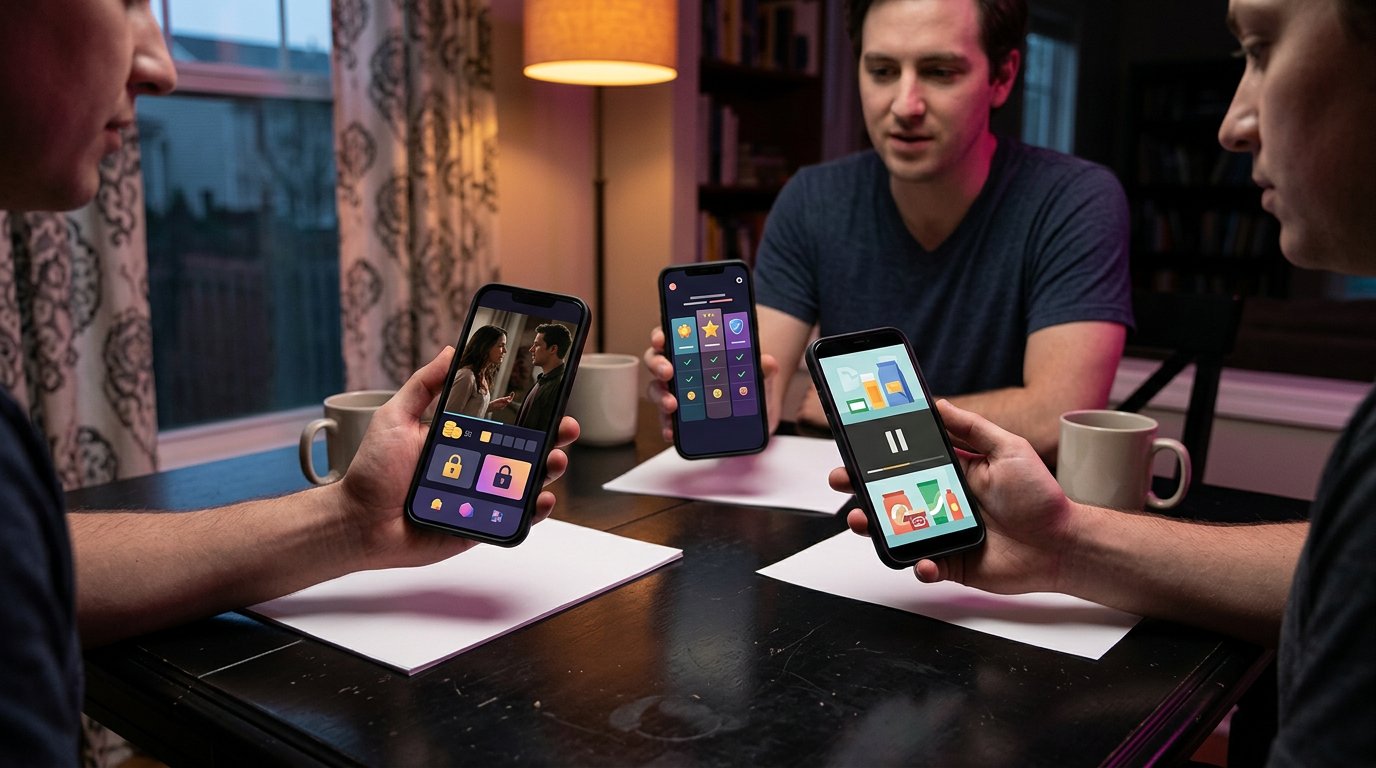
A vertical drama coin pricing strategy is a plan for what an episode costs, when the paywall appears, and how coins sit alongside subscriptions and ads. There is no single published conversion rate you can copy; what matters is a clear price before purchase, a free sample that still leaves a reason to continue, and reporting you can trust. Coins, VIP access and advertising answer different viewer habits, and most services end up testing a mix rather than picking one model forever.
Dramnex OS is built around coins, episode unlocks and VIP on a branded web app. There is a free 7-day trial with no card. Trial storefronts show a “Made with Dramnexos.com” watermark, which comes off on a paid plan. See also how coin-based streaming apps make money and how to build a short drama app with coin monetization.
Key Takeaways
- Set coin costs so viewers can understand what an episode unlock costs in real money, then use purchase and retention patterns to refine the setup.
- Place the paywall around a compelling story turn. Free episode length and cliffhanger timing shape whether viewers keep watching or pay to continue.
- Choose coins, subscriptions, a hybrid, or ads based on how your audience watches and pays. Each model creates a different balance of access, repeat revenue, and ad inventory.
- Use branded streaming tools to manage coins, VIP access, episode unlocks, and analytics in one app, then use those signals to guide pricing decisions.
Table of contents
- How should you read coin-model conversion and revenue?
- Is pay-per-episode better than a subscription?
- How do IAP, subscriptions, hybrid models and ads compare?
- How does coin-based pricing compare with a subscription?
- How Dramnex OS handles coins, VIP and ads
How should you read coin-model conversion and revenue?
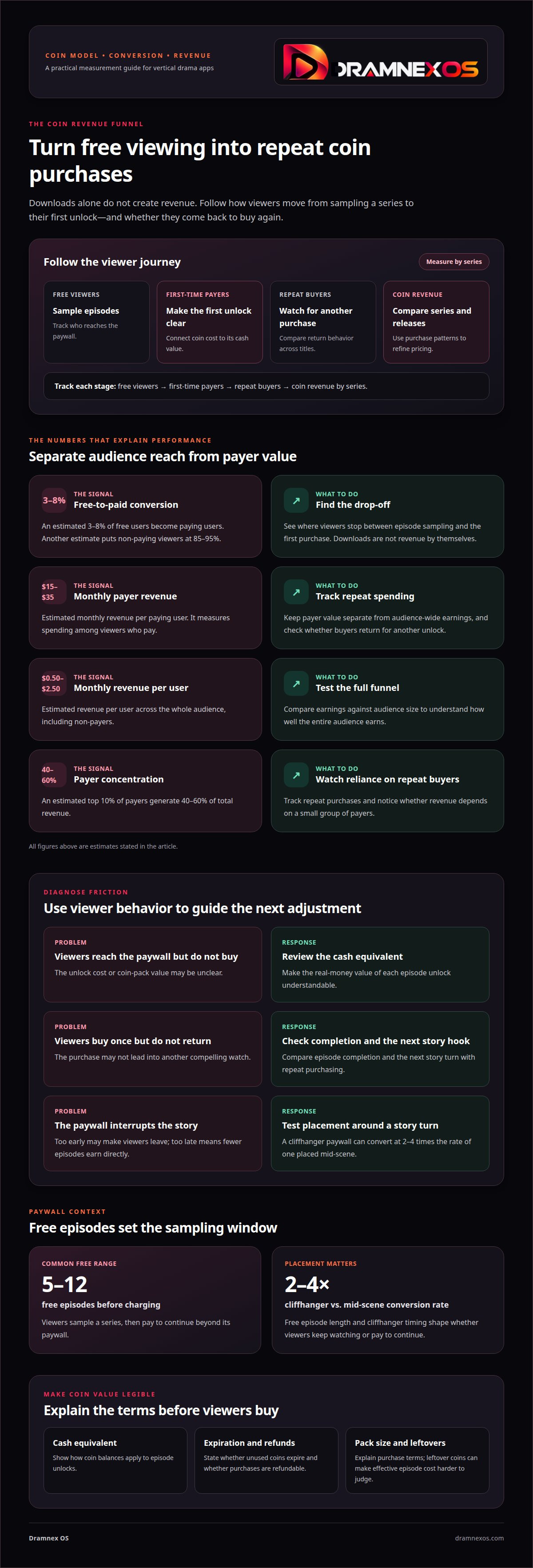
Measure coin revenue from the free viewer through repeat purchases. Public conversion rates and revenue-per-user figures for vertical-drama apps are rarely published with a clear method, so treat any single percentage as a planning assumption to test with your own data, not a benchmark you can bank on. Track how viewers move from episode sampling to their first purchase, then to another unlock.
Separate payer value from revenue across the whole audience. Average revenue per paying user answers a different question from revenue across every user, including those who never buy. A small share of payers often accounts for a large share of revenue, so repeat purchasing matters.
Use a simple funnel: track free viewers, first-time payers, repeat buyers, and coin revenue by series. Compare each stage across titles and release periods. If viewers reach the paywall but don’t buy, review the unlock cost and coin-pack value. If they buy once but don’t return, look at episode completion and the next story hook. Base your vertical drama coin pricing strategy on these patterns, not on one fixed coin rate.
What are the rules for coin refunds, expiration, and purchases? There’s no single rule across apps: each app’s published terms specify whether purchases are refundable, whether unused coins expire, and how purchases work. Explain those terms before viewers buy, including how coin balances apply to episode unlocks.
| Measure | What it shows | How to use it |
|---|---|---|
| Free-to-paid conversion | Share of free users who make a first purchase, measured on your own data | Find where viewers stop before purchase |
| Monthly payer revenue | Average spending among people who pay, in a stated month | Track repeat spending separately |
| Monthly revenue per user | Revenue divided by all users, including those who never buy | Compare earnings against audience size |
| Payer concentration | Share of revenue coming from the most active payers | Watch whether revenue relies on a small group |
Choose the measure that matches the decision: conversion diagnoses the paywall, payer revenue tracks buyer value, and all-user revenue tests the full funnel. A clear coin pricing setup should make each step measurable, from first unlock to repeat purchase.
Is pay-per-episode better than a subscription?
Pay-per-episode links payment to a specific story, while subscriptions bundle access. The number of free episodes and the cost to unlock others shape how viewers experience that choice.
Where should you place free episodes and the paywall?
Vertical drama apps commonly offer 5 to 12 free episodes before charging. The free-to-paid model lets viewers sample a series, then pay to continue beyond its paywall. Timing changes the experience: a paywall at a cliffhanger can convert at 2 to 4 times the rate of one placed mid-scene. How does the model work? Viewers watch free episodes, then unlock later episodes with coins or another paid option.
How should coin bundles and episode unlocks be priced?
Coin bundles let viewers purchase currency in advance and spend it episode by episode. Unlike a subscription, coins tie each purchase to specific episodes, but unused balances can make their value harder to judge.
What risks or hidden costs should viewers consider before buying coins? Review the app’s expiration, refund, and purchase terms, then calculate the cash equivalent of each unlock. Pack size and leftover coins can make the effective cost less clear than a single episode price.
Compare that spending pattern with a subscription before choosing. Coins suit viewers who prefer selective access; subscriptions suit those who watch broadly. Track completion and repeat purchases alongside paywall timing.
Your total spend depends on bundle size and episode choices; the exact figure is provided in a quote for your case.
For operators shaping coin packs and unlock rules, platform pricing options can help frame the setup decision.
How do IAP, subscriptions, hybrid models and ads compare?
Coins, subscriptions, and ads generate revenue in different ways. Apps can also award free coins for daily rewards, ad views, or referrals.
How do in-app purchases work in a vertical-drama app?
In-app purchases let viewers pay for digital access inside an app. With coins, viewers buy currency and spend it on episode unlocks. Unlike subscriptions, these purchases don’t require a recurring commitment. Revenue depends on viewers choosing to buy and returning for more. Track first purchases and repeat transactions separately to see whether episodes drive ongoing demand.
When does a hybrid coin, subscription and ad model make sense?
A hybrid model combines paid unlocks with subscriptions or ad-supported viewing. For example, viewers might watch an ad or spend coins to access an episode, while subscribers have another access option. This offers more than one way to pay, but can make the offer harder to understand. Label each option clearly and track its revenue and retention separately.
Subscriptions replace episode-by-episode purchases with recurring access. This structure can suit regular viewers, but its value depends on how often they watch. Compare subscription renewals with coin purchases over the same viewing period. Don’t judge by sign-ups alone; measure whether subscribers keep watching.
Ads can monetize viewers who don’t buy coins or subscribe. Vertical drama platforms typically run 1 to 2 ads per episode in the ad-supported layer. This adds revenue opportunities, but each ad interrupts the story. Keep placement clear and measure whether viewing continues after the break. An ad-supported model usually needs a large, regular audience before CPM revenue covers content and distribution costs; the exact audience size depends on fill rates, rates, and your cost base, not a single published threshold.
Daily rewards, rewarded ads, and referrals can grant free coins when viewers complete those actions. Treat each as a distinct acquisition or engagement method. Track whether viewers who claim rewards return to the series, and whether referred users watch beyond their first visit. Free coins may prompt another episode, but they aren’t paid coin revenue.
Choose a mix that matches viewing behavior: coins for selective unlocks, subscriptions for regular viewing, and ads for non-paying audiences. Review revenue and retention for each option before expanding the mix.
How does coin-based pricing compare with a subscription?
Coins charge for specific unlocks; subscriptions charge for ongoing access. The better fit depends on viewing frequency, repeat purchases, and revenue per paying user.
How does coin-based pricing work?
Coin pricing links each payment to episodes a viewer chooses to unlock. That can capture more from viewers who follow several stories, but spending varies with their choices. A coin-based platform with the same paying audience often generates 3 to 5 times the monthly revenue of a subscription platform. That upside depends on repeat purchases, not coin sales alone.
How should subscription pricing be set?
A subscription provides recurring access for a set billing period. Revenue can become more predictable when subscribers renew, but depends on continued use and retention. A viewer who watches one series may see less value than someone who follows several. Compare renewal behavior with episode completion instead of treating the first subscription payment as proof of lasting demand.
The comparison comes down to viewing depth. Coins can earn more from highly engaged viewers, while subscriptions simplify spending for regular viewers. Higher revenue per payer doesn’t automatically mean better business results: content costs, retention, and the share of viewers who pay affect the value of either model.
Use a practical test before committing:
- Choose coins when viewers unlock episodes selectively or return to multiple series.
- Choose subscriptions when frequent viewers value broad, continuing access.
- Compare repeat coin purchases against subscription renewals across the same viewing period.
- Track revenue alongside retention, so a short-term gain doesn’t hide viewers leaving.
For a mixed audience, test both payment options and compare results by cohort. Keep the offer clear so viewers know what access each payment provides. Use revenue per paying user and repeat behavior to assess performance, then adjust the model as viewing patterns change.
Ready to build and measure your own coin or subscription setup? Explore platform pricing options for tools that support coins, VIP access, episode unlocks, and analytics.
How Dramnex OS handles coins, VIP and ads
Viewers get a branded web app they can install from the browser as a PWA. Dramnex OS does not provide native iOS or Android apps, and it does not list apps on the App Store or Google Play. There is a free 7-day trial with no card. Trial storefronts show a “Made with Dramnexos.com” watermark, which comes off on a paid plan. Plans are Creator at $49/month, Starter at $149.99/month, Launch at $399/month and Studio at $999/month, plus a 5% platform fee on collected viewer payments (0% during the trial). See current pricing. Viewer payments go to the operator’s Stripe account once Stripe is connected. Until then, Dramnex OS can collect payments and pay out by Wise (including to a Pakistani bank in PKR), Payoneer, PayPal, or bank transfer. Stripe’s processing fee is separate.
You can start a free 7-day trial, open the self-serve demo, or browse finished series on the content marketplace.
Related reading
FAQ
Frequently asked questions
How do micro drama apps make money?
Most use some mix of coin or episode unlocks, VIP subscriptions and advertising. The mix only works if the free sample still leaves a reason to continue, the price is visible, and entitlements stay in sync with payment status.
How much is a micro drama coin worth?
A coin is worth whatever the app’s terms say it can buy. There is no standard cash value across apps. Show how many coins an episode costs and what a coin pack costs in local currency before the viewer pays.
What is RPD for vertical drama apps?
RPD means revenue per download in a stated window. It is not revenue per active viewer, because a download is not the same as someone who keeps watching or paying. Some industry write-ups cite specific US RPD figures; without a clear primary source, treat those numbers as unverified.
What are typical coin prices for vertical drama episodes in the US?
Listed prices vary by app, title and pack size, and they change. Use competitor listings as a starting range to test, not as a fixed market rate. On your own service, pick a pack and per-episode price you can explain at checkout.
How many coins does a vertical drama episode usually cost?
It depends on the app and whether the episode is early, mid-series or a finale. There is no official standard. What matters is that the cost is visible and consistent, and that a coin pack maps clearly to the number of episodes it can unlock.
Is pay-per-episode better than a subscription?
Neither is always better. Episode unlocks suit viewers who want one story; a VIP plan suits frequent viewers who want predictable access. Many operators test both, plus a short free run, and keep the model that their own cohort data supports.
Newsroom by email
Get new articles in your inbox
Guides on launching and monetising your vertical-drama business. Confirm your address once, and we’ll email you when a new article is published.
Launch your own
Your own branded streaming app, live in minutes
Dramnexos is the white-label streaming operating system for vertical drama: your brand, your domain, coins, VIP and episode unlocks — with a free storefront to start and a licensing marketplace for finished series.