
licensing
How to License Short Dramas for Your Streaming App: Costs, Rights and Where to Buy
You can only buy the rights a licensor actually controls. A short drama licensing marketplace helps you find finished series, but it does not make every title worldwide or exclusive. Price follows the rights package — territory, exclusivity, term and volume — as much as the story itself.
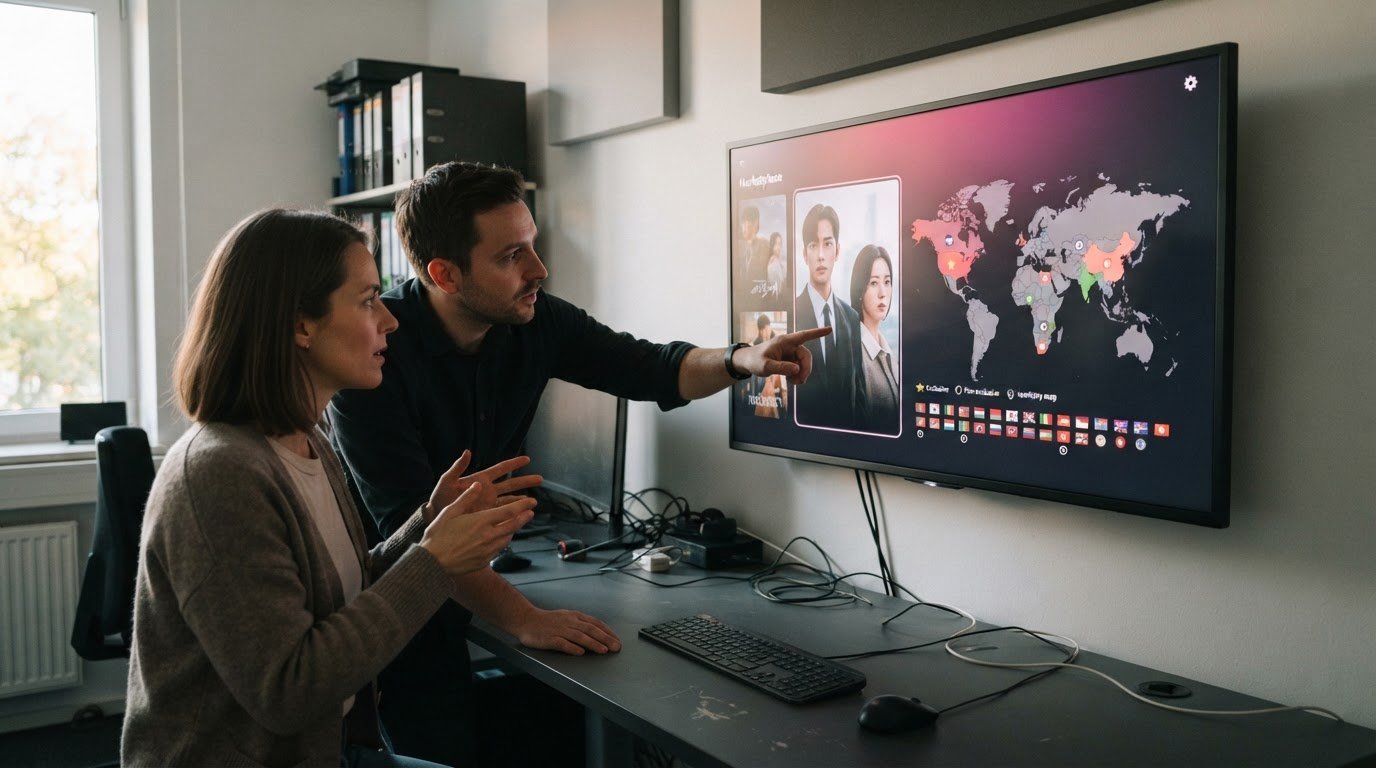
You can negotiate worldwide exclusivity only for the territories and rights the licensor actually controls and is willing to reserve. A short drama licensing marketplace can connect you with finished series; it does not make every title globally exclusive. Licensing costs depend on territory, exclusivity, term, volume and the condition of the title, so the rights package shapes the deal as much as the story itself.
This guide explains what affects price, how exclusive and non-exclusive deals differ, and what records to review before you distribute a series. For the contract and delivery checklist, see finished short drama series licensing: terms, rights and delivery. Confirm the licensor can grant the rights you need; the U.S. Copyright Office explains how to request permission.
Key Takeaways
- Estimate licensing costs by weighing the rights package, title volume, localization needs and the condition of the series.
- Choose exclusivity based on the territories and rights you need, not on the assumption that a deal covers the whole world.
- Prepare for global distribution by reviewing each title’s format, territory scope and localization requirements.
- Use title-level metadata and clear rights records to assess what you can distribute and avoid gaps after delivery.
Table of contents
- How much does it cost to license a short drama in 2026?
- How do exclusive and non-exclusive distribution models differ?
- How does global short-drama licensing and distribution work?
- What per-title metadata and chain-of-title records should you review?
- How does the Dramnex OS licensing marketplace work?
- How do you turn licensed titles into a coherent catalogue?
How much does it cost to license a short drama in 2026?
There’s no fixed licence price. Short-drama licensing costs can vary five-fold as territory, exclusivity, term, volume and title condition change. Catalogue size matters too: a ten-title acquisition and a fifty-title deal can have very different per-title economics. Estimate costs from the rights package, not just the number of series.
Chinese micro-dramas (duanju) often use episodes of about one to two minutes (Wikipedia: Duanju; CNA). Western-produced vertical series increasingly run three to eight minutes per episode. A series may contain twenty to a hundred episodes, so episode count affects both the amount of content acquired and the localization workload. Confirm whether the offer covers a full series or selected titles.
A short drama licensing marketplace brings together finished titles from different studios and creators. Direct licensing involves negotiating with a rights holder or its representative. A streaming platform provides the app and distribution tools, but isn’t necessarily a source of licensing rights. Marketplaces can simplify title discovery, while direct deals may suit buyers who already know the rights holder.
Language affects the budget. A production in the target language avoids dubbing into that language, while a dubbed version adds localization work. For scale, dubbing a seventy-episode series can cost close to the licence fee per title. Chinese and Western catalogues may also differ in episode length and format, so compare the delivered version with the one your audience needs.
Production and partnerships shape what reaches the catalogue. Vertical drama is mobile-first, typically framed in a 9:16 aspect ratio; some productions use one to three cameras. Co-production partnerships can bring producers and distributors together around a title, while distribution partnerships can extend its reach. Price the complete package, including rights, localization and any shared distribution arrangement.
How do exclusive and non-exclusive distribution models differ?
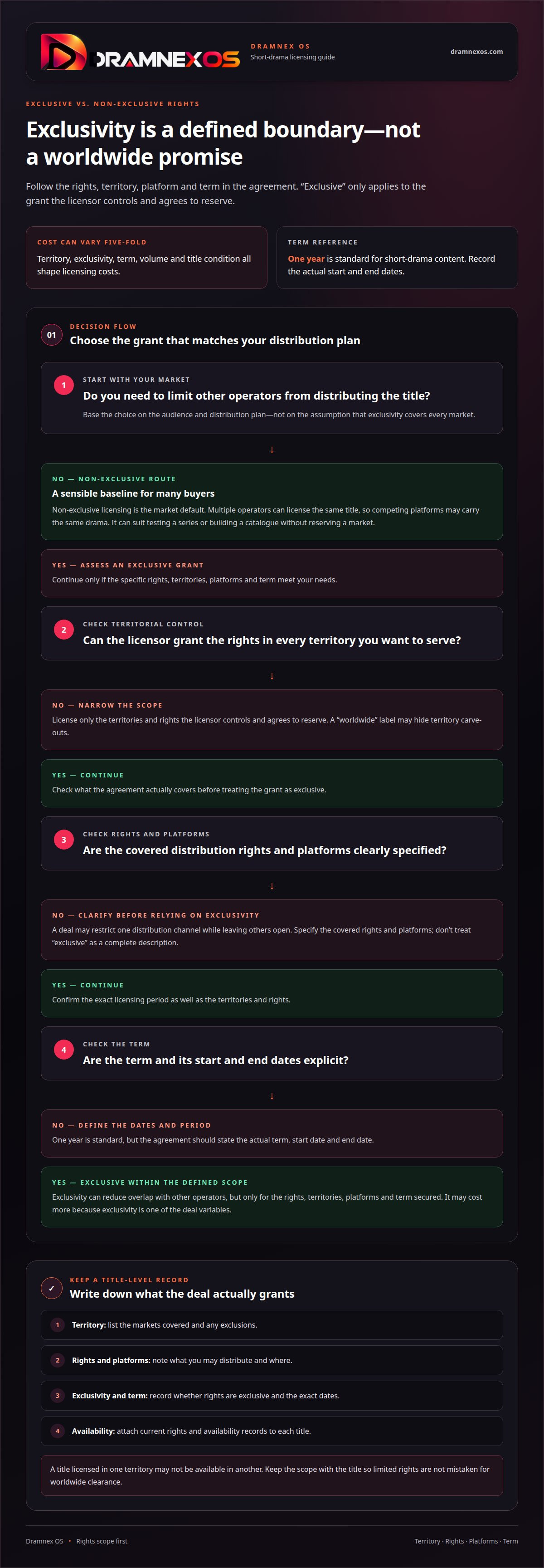
Non-exclusive licensing is the market default and a sensible baseline for many short-drama buyers. Exclusivity can limit who else may distribute a title, but only within the rights, territories and term defined in the agreement.
How should territory and licensing terms be written?
A one-year licensing term is standard for short-drama content. The agreement should define the territory, start and end dates, and whether rights are exclusive there. “Worldwide” needs clear boundaries: specify which territories the licensor can grant and whether any are excluded. Territory, exclusivity, term, volume and title condition all affect licensing costs.
What exclusivity pitfalls should buyers watch for?
A worldwide label can conceal territory carve-outs or rights limited to certain platforms. A deal may also restrict one distribution channel while leaving others open. These limits affect what an operator can offer viewers. Specify the covered territories, platforms and rights in the agreement instead of treating “exclusive” as a complete description.
Non-exclusive rights let multiple operators license the same title. This can suit a buyer testing a series or building a catalogue without reserving a market. It also means competing platforms may carry the same drama. Exclusivity can reduce that overlap, but its value depends on the specific territory and rights secured.
Before choosing, match your distribution plan to the rights package. For example, a buyer targeting several countries needs to know whether the grant covers each territory or only selected markets. A one-year term also shapes release planning and renewal discussions. Record the exact term and territory beside each title, so your platform doesn’t mistake limited rights for worldwide coverage.
Exclusive rights aren’t automatically the stronger choice. They may cost more because exclusivity is one of the deal variables, while non-exclusive rights remain the market baseline. Match the grant to your audience and distribution plan. If a title’s value depends on a specific market, consider whether exclusivity there matters more than a broad grant with carve-outs.
How does global short-drama licensing and distribution work?
Global distribution depends on territory-specific rights, usable formats and a clear catalogue plan. In the United States, streaming-app operators, distributors, studios and content marketplaces license short dramas.
How can a licensing marketplace help with catalogue sourcing?
A licensing marketplace can connect buyers with finished titles from studios and creators. Catalogue sourcing works best when each title’s available territories and distribution rights are clear. Match those rights to the markets and platforms you plan to serve, then group titles by language, format and audience fit. This keeps library planning grounded in what you can distribute.
For secondary distribution, track each title’s rights and current availability across your library. A series licensed for one territory may not be available in another. Keep those records attached to the title, not just the catalogue. This clarifies later distribution decisions and helps prevent limited rights from being mistaken for worldwide clearance.
How can US buyers find, negotiate and license short dramas?
US platforms can source dramas directly from studios or creators, through distributors, or via licensing marketplaces. Buyers typically browse catalogue entries, identify suitable titles, then negotiate the rights package with the rights holder or representative. The terms define territory, exclusivity, licensing period and permitted distribution. A marketplace supports discovery and deal-making; it doesn’t automatically grant worldwide rights.
For global reach, co-distribution can split distribution work across partners and territories. Format sales may also involve versions prepared for different viewing contexts. Some catalogues include 16:9 material reframed for portrait viewing, so format affects how a title fits a vertical-drama app. Confirm which version the deal covers and whether that version can be distributed in each target territory.
Library management continues after acquisition. Keep each title’s territory, term, format and distribution status linked to its record. This helps your team identify what can move into secondary distribution as the catalogue changes. For example, a title available in one market may become a candidate for another only when the relevant rights allow it.
What per-title metadata and chain-of-title records should you review?
Suppliers listing a short drama need title-level information and a clear record of the rights they can license. Buyers rely on both to assess a series and understand where they can distribute it.
What metadata should each title include?
Give each series its own entry, not just a catalogue-level description. Include the title, episode count, language, format, synopsis and available territories. Note whether the supplied video is vertical or reframed from another aspect ratio. These details help buyers assess fit, localization needs and distribution scope before discussing a deal.
Keep each description specific to its title. A catalogue summary may identify a genre, but it won’t tell buyers what an individual series contains. If the licensor only provides catalogue-level details, a buyer may still be chasing title-level information three weeks after delivery. Accurate records make evaluation and library handoff more direct.
What chain-of-title and listing records do you need?
Chain-of-title diligence traces the rights behind a series and the authority to license them. Suppliers should provide records identifying the rights holder and clarifying which distribution rights they control. The listing should align those rights with the stated territories, term and exclusivity. A catalogue description alone doesn’t establish what a buyer can license.
Keep supporting rights records attached to each title, especially when a catalogue includes works from multiple creators or studios. If rights are limited by territory or platform, state those limits beside the title. Buyers need a clear link between the supplier’s authority and the rights offered in the deal. This helps prevent broad catalogue claims from obscuring title-specific restrictions.
Before a title is presented to buyers, organize its metadata and rights information together. A complete entry lets a buyer evaluate the series without relying on a general catalogue note. Prepare a drama catalogue for licensing with title-level details and rights records in view.
How does the Dramnex OS licensing marketplace work?
The Dramnex OS content marketplace connects streaming operators with finished short dramas from studios and creators. Operators can license titles for their storefronts, and suppliers can list series and get paid per deal. The licensing deal covers the content rights; the platform provides the branded storefront and viewing experience.
Viewers get a branded web app they can install from the browser as a PWA. Dramnex OS does not provide native iOS or Android apps, and it does not list apps on the App Store or Google Play. There is a free 7-day trial with no card. Trial storefronts show a “Made with Dramnexos.com” watermark, which comes off on a paid plan. Plans are Creator at $49/month, Starter at $149.99/month, Launch at $399/month and Studio at $999/month, plus a 5% platform fee on collected viewer payments (0% during the trial). See current pricing. Viewer payments go to the operator’s Stripe account once Stripe is connected. Until then, Dramnex OS can collect payments and pay out by Wise (including to a Pakistani bank in PKR), Payoneer, PayPal, or bank transfer. Stripe’s processing fee is separate. A custom domain can be attached on a paid plan; the trial runs on a dramnexos.com subdomain.
Try the self-serve demo or start the free trial when you want to pair licensed series with a storefront you control.
How do you turn licensed titles into a coherent catalogue?
Set a release plan around your audience, the titles that fit, and how each series will sit in the catalogue. A marketplace helps you source finished stories; a clear operating plan turns those acquisitions into a viewing experience. Keep content decisions tied to the product you want people to use, rather than treating licensing and distribution as separate projects.
Related reading
FAQ
Frequently asked questions
Can I get worldwide exclusivity?
Only if the rights holder controls the relevant rights worldwide and agrees to grant them exclusively. A worldwide grant still needs clear boundaries: platforms, languages, term and what happens if the title was already released in some markets.
What is a short drama licensing marketplace?
A short drama licensing marketplace connects buyers seeking finished series with suppliers offering titles for licensing. It can help you discover content and start rights discussions in one place. The written agreement, not the listing, is what grants the rights.
Who can license short dramas?
Producers, studios, distributors and individual creators can license a series if they control the rights being offered or have authority to represent the rights holder. A distributor’s involvement alone does not prove it can grant every requested right.
What short drama licensing rights are usually defined in a deal?
Rights are typically defined by use and place: streaming on named platforms, covered territories, language versions, exclusivity, term and any holdbacks. The contract should also say what promotional use is included.
How much does it cost to license a short drama?
There is no single standard amount or revenue-share structure. A deal may use a fixed licence fee, a share of defined revenue, or a mix of both. The contract should state which revenue is counted, which deductions apply, and when payment is due.
What contracts and clearances are needed for short drama licensing in the US?
Use a written agreement that identifies the title, parties, rights granted, territory, term, exclusivity and compensation. Request records showing the licensor’s authority to grant those rights, plus relevant clearance materials for music, talent and underlying works.
Newsroom by email
Get new articles in your inbox
Guides on launching and monetising your vertical-drama business. Confirm your address once, and we’ll email you when a new article is published.
Launch your own
Your own branded streaming app, live in minutes
Dramnexos is the white-label streaming operating system for vertical drama: your brand, your domain, coins, VIP and episode unlocks — with a free storefront to start and a licensing marketplace for finished series.