
Home › Newsroom › monetisation
monetisation
How Coin-Based Streaming Apps Make Money (and How to Launch One)
A coin-based streaming app uses virtual credits so viewers can unlock episodes or, in some live apps, support a creator. The model works when every coin has a clear purpose, the price is shown before purchase, and the operator can account for platform fees and payouts.
A coin-based streaming app uses virtual credits so viewers can unlock episodes, buy access, or, in some live apps, support a creator. The model works when every coin has a clear purpose, the price is visible before purchase, and the operator can account for fees and payouts. Coins are not automatically cash or cryptocurrency; their value is whatever the app’s terms say they can be used for.
Dramnex OS is built around coins, episode unlocks and VIP for short drama, on a branded web app viewers can install as a PWA — not a native App Store or Google Play app. You can try it on a free 7-day trial with no card, or open the self-serve demo. For a closer look at coin pricing, see vertical drama coin pricing.
Key Takeaways
- Match each coin feature to the viewing format, so spending and rewards have a clear purpose.
- Set creator tipping rules that make audience support easy to understand and use.
- Use engagement rewards to encourage repeat viewing without making coins feel like the whole experience.
- Identify which app model fits your audience, then map the features needed to launch it.
Table of contents
- What coin features appear across OTT, VOD and live streaming?
- How do coin systems and creator tipping work?
- How do coins support engagement and monetization?
- Which kinds of streaming apps use coins or virtual currency?
- How does Dramnex OS use coins?
- How do you turn the coin model into a launch plan?
What coin features appear across OTT, VOD and live streaming?
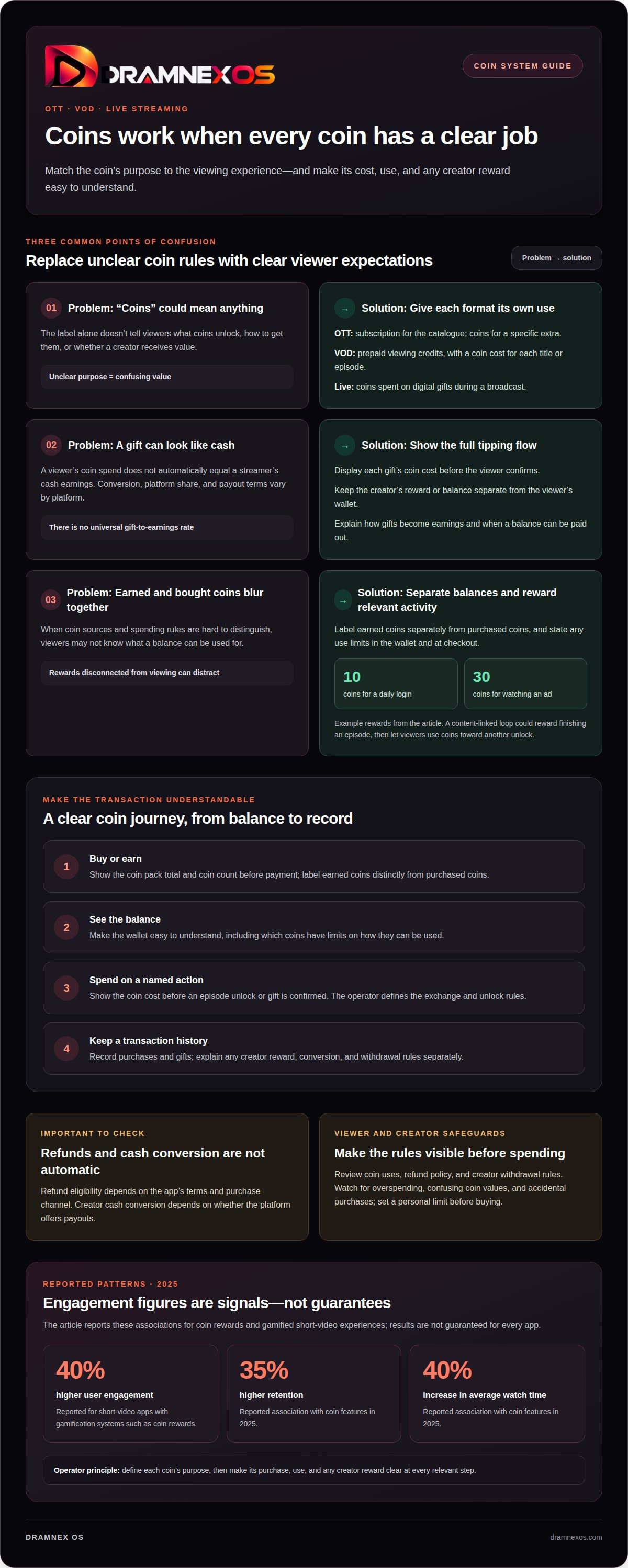
In the United States, compare coin-based streaming apps by what coins unlock, how viewers get them, and whether creators receive value. A VOD app might use coins for an episode; a live app might use them for digital gifts. The word “coins” alone doesn’t explain how the system works.
OTT services can offer coins alongside subscriptions or VIP access. For example, viewers might use a subscription to access the catalogue, then spend coins to unlock a specific extra. In VOD, coins can work as prepaid viewing credits, with a coin cost assigned to each title or episode. The operator sets the exchange and unlock rules.
In live-streaming apps, viewers typically buy virtual coins and spend them on digital gifts during a broadcast. The streamer may receive a platform-defined reward or balance, rather than a direct cash payment for each coin. The app’s conversion and payout rules determine what creator support means in practice.
Can coins be refunded or converted to cash? Neither is automatic. Refund eligibility depends on the app’s terms and purchase channel, while cash conversion depends on whether the platform offers creator payouts. Before buying, review how coins can be used, the refund policy, and any creator withdrawal rules.
Are coin-based streaming apps safe and legitimate? The format alone doesn’t establish legitimacy. Look for clear coin prices, spending options, transaction records, and policies. For example, a purchase screen should show the coin pack total and the number of coins before payment.
Watch for overspending, confusing coin-to-feature values, and accidental purchases. Set a personal limit before buying. Streamers should understand whether gifts create a withdrawable balance, how platform rules affect it, and what activity can change their earnings.
Coins also create operational risks for app owners. Unclear conversion rules can frustrate viewers, while unclear gift values can weaken creator trust. Define each coin’s purpose, then make its purchase, use, and any creator reward clear at every relevant step.
How do coin systems and creator tipping work?
A coin system connects a viewer’s balance to specific actions. A viewer buys coins, sees them in a wallet, then spends them to unlock an episode or send a creator a gift. The operator defines coin packs, gift options, and what happens after a gift is sent.
For tipping, viewers select a gift with a displayed coin value and send it during a livestream. The streamer sees the support appear, while the platform records the transaction. A clear gift menu shows the coin cost before viewers tap, so they don’t have to guess what a symbol or animation represents.
How much do streamers earn from virtual gifts and coins? There’s no universal conversion rate. Earnings depend on the platform’s gift-to-creator conversion, any platform share, payout terms, and the number of gifts viewers send.
Keep the flow understandable at each step:
- Show the coin cost beside each gift, before the viewer confirms.
- Display the creator’s reward or balance separately from the viewer’s coin wallet.
- Explain how gifts become creator earnings and when a balance can be paid out.
- Record each purchase and gift in a transaction history.
Coins can also reward activity, but keep earned coins distinct from purchased coins. For example, a platform might award 10 coins for a daily login or 30 for watching an ad. Those balances can be limited to specific uses, while purchased coins support paid unlocks or gifts. State the difference in the wallet and at checkout.
For creators, tipping works best as one support option, not the only route to income. A short thank-you, a visible gift response, or a scheduled live session can make the exchange feel meaningful without promising a return to viewers. Operators planning coin and unlock mechanics can explore a branded streaming platform built around those features.
How do coins support engagement and monetization?
Coins can turn viewing actions into rewards, purchases, or creator support. The business model depends on what viewers do to earn or spend them.
How can coins support audience engagement?
Coin-based audience engagement uses virtual currency to reward or guide viewer activity. It matters because a reward can give viewers a clear next action, such as returning to a series or unlocking an episode.
Some operators add daily rewards or referral credits to bring viewers back. Those results vary by catalogue and audience, and published “uplift” figures are often unsourced, so test any reward loop with your own viewers rather than treating it as a forecast.
Build the loop around relevant actions. For example, reward viewers for finishing an episode, then let them use coins toward another unlock. Tie rewards to content, not clicks alone. If coins feel disconnected from the viewing experience, they can distract rather than deepen engagement.
What platform fees and commissions apply?
Platform fees and commissions are amounts withheld from a transaction or creator payout. They affect the share left for the operator or streamer.
What fees or commissions do streaming platforms charge? There’s no single standard rate. The amount depends on the platform’s terms, transaction type, payment channel, and any revenue split between the platform and creator.
Model each transaction separately. A coin purchase, episode unlock, and creator gift can each follow different payment and revenue rules. Show viewers the coin cost before purchase, and explain the creator’s share before they accept gifts. Don’t present a gift’s coin value as the streamer’s cash earnings.
For operators, coin revenue is only part of the model. Track whether viewers buy coins for access, spend them on gifts, or earn them through engagement. Compare these actions with repeat viewing and completed unlocks. A dashboard can help reveal which coin uses give viewers a reason to return.
Set limits on reward actions and make redemption rules visible. Coin rewards are common in short-video and live apps, but how they are used — and whether they help — depends on the product. A clear purpose matters more than adding coins by default.
Which kinds of streaming apps use coins or virtual currency?
Coins appear in apps where viewers need a flexible way to unlock content or interact. The main categories are transactional VOD, short-drama platforms, and live-streaming services with creator gifts.
In transactional VOD, coins can act as prepaid credits for individual titles. For example, a viewer might use a coin balance to unlock one film instead of buying a subscription. This model suits libraries with one-off rentals or premium releases, where each title has its own access option.
Short-drama apps can use coins for episode-by-episode access. Viewers might watch an opening episode, then spend coins to unlock the next installment. Operators can pair this with VIP access, giving viewers a choice between individual episode unlocks and a broader access tier.
Live-streaming apps use virtual currency for interaction. Viewers can spend coins on digital gifts during a creator’s broadcast. Gaming streams, music performances, and live Q&As can all use gifts to let viewers show support without interrupting the stream.
- Transactional VOD: Use coins to unlock a selected title or rental.
- Short drama: Use coins to open the next episode in a series.
- Live video: Spend coins on a creator gift during a broadcast.
Some apps combine models. A short-drama service could offer VIP access and paid episode unlocks, while a live channel could add gifts for creator interaction. The key distinction is what the coin buys: viewing access, a digital item, or a way to support a creator.
For operators, choose a model that matches the content. A catalogue of standalone films points toward title-level access. A serialized story can support episode unlocks, while a creator-led live channel suits interactive gifts. Keep each coin action distinct in the interface, so viewers know whether they’re buying access or showing support.
How does Dramnex OS use coins?
Dramnex OS is a white-label vertical-drama platform. Operators use coins, VIP and episode unlocks on their own branded storefront; live-stream tipping and gifts are a different product pattern, common in live apps, and are not required to run a short-drama catalogue.
Viewers get a branded web app they can install from the browser as a PWA. Dramnex OS does not provide native iOS or Android apps, and it does not list apps on the App Store or Google Play. There is a free 7-day trial with no card. Trial storefronts show a “Made with Dramnexos.com” watermark, which comes off on a paid plan. Plans are Creator at $49/month, Starter at $149.99/month, Launch at $399/month and Studio at $999/month, plus a 5% platform fee on collected viewer payments (0% during the trial). See current pricing. Viewer payments go to the operator’s Stripe account once Stripe is connected. Until then, Dramnex OS can collect payments and pay out by Wise (including to a Pakistani bank in PKR), Payoneer, PayPal, or bank transfer. Stripe’s processing fee is separate.
Operators who need finished series can license titles on the content marketplace. Try the self-serve demo to see coin unlocks in a storefront, or start the free trial.
How do you turn the coin model into a launch plan?
Before you build, choose the viewer journey you want to lead with. Decide what a coin buys — usually the next episode in a short-drama catalogue — show the price before purchase, and write down how fees, refunds and payouts will be handled. Start with that path, then add rewards or other coin uses only if they help people watch more of the story.
Related reading
FAQ
Frequently asked questions
What is a coin-based streaming app?
A coin-based streaming app uses virtual credits for selected viewer actions. Those credits may unlock an episode or, in some live apps, support a creator. They are app-specific units, not automatically cash or cryptocurrency.
How can users buy, earn, or redeem coins?
Users can usually buy coins through a checkout, and some apps also award them for referrals or other activities. Redemption is limited to the features the app allows. Always show the coin cost before purchase and state whether unused coins can be refunded.
Do coin apps have to include tipping and gifts?
No. Tipping and virtual gifts are common in live-streaming apps. A short-drama storefront can use coins only for episode unlocks or catalogue access. Keep each coin action distinct so viewers are not asked to gift when they are buying the next episode.
What fees apply when viewers buy coins?
Expect a payment-processing fee from the card network or Stripe, and a platform fee if you use a hosted platform. On Dramnex OS the platform fee is 5% of collected viewer payments on paid plans (0% during the free trial), and Stripe’s processing fee is separate. Until Stripe is connected, payouts can go out by Wise, Payoneer, PayPal or bank transfer.
What are the rules for using coins?
The app sets its own coin rules. Before a purchase, the viewer should see the coin cost, what it unlocks, and whether the action can be reversed. Creator payout terms, if any, can differ from the price the viewer paid.
Newsroom by email
Get new articles in your inbox
Guides on launching and monetising your vertical-drama business. Confirm your address once, and we’ll email you when a new article is published.
Launch your own
Your own branded streaming app, live in minutes
Dramnexos is the white-label streaming operating system for vertical drama: your brand, your domain, coins, VIP and episode unlocks — with a free storefront to start and a licensing marketplace for finished series.