
short drama
License Short Drama Series for App Distribution Worldwide
Licensing a short drama series means agreeing in writing on titles, territories, service type, term, exclusivity and fee with whoever controls the rights. Here is what to put in the deal, how to check a catalogue, and where to find series.
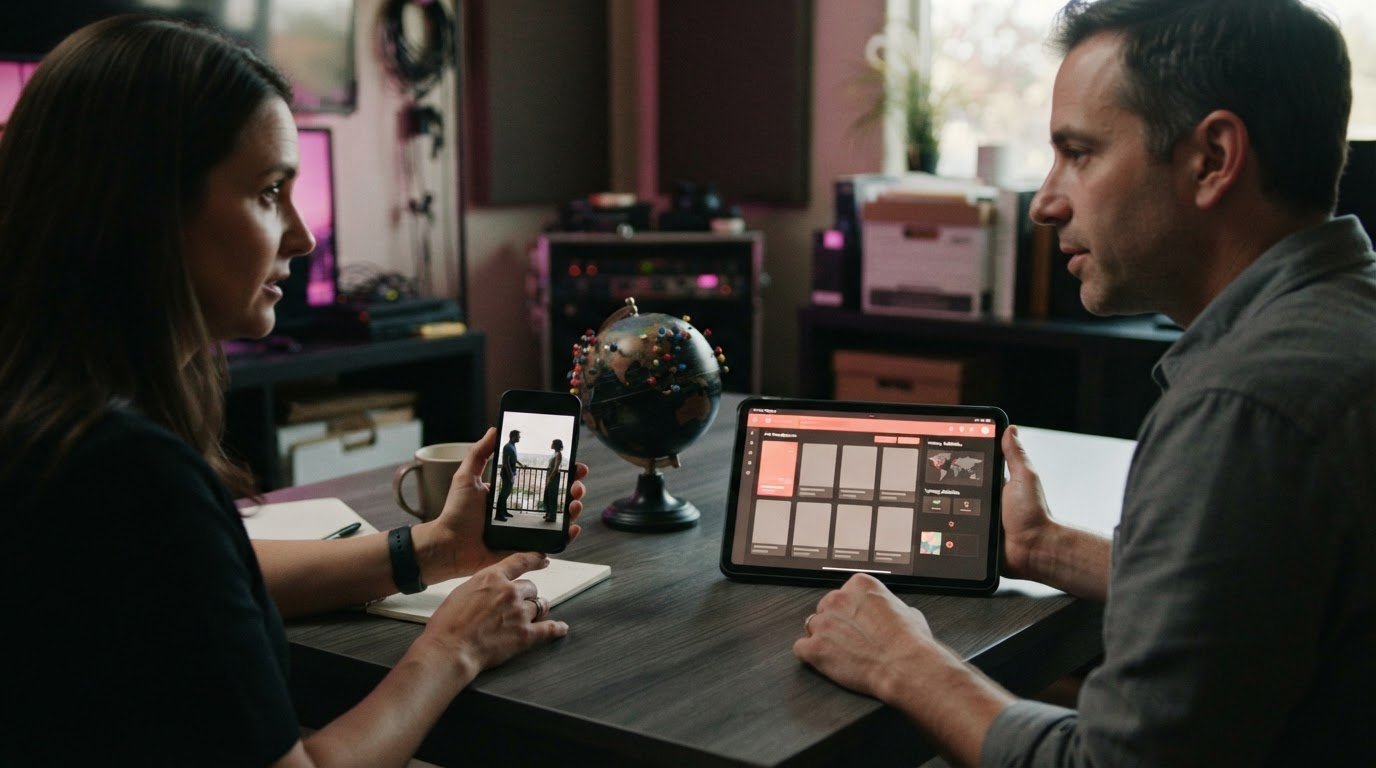
To license a short drama series for your app, you agree a written licence with whoever controls the rights (the studio, the creator or their distributor) that names the titles and episodes, the territories, the type of service, the term, exclusivity and the fee. For a series that is already out, some markets may be licensed to someone else, so a non-exclusive licence for the territories you actually serve is usually the easiest deal to close. Check the rights paperwork and the delivered files before you pay.
This guide covers what to agree, how to check a catalogue, where to find series to license, and how the Dramnex OS content marketplace works for operators and rights holders. Licence terms and prices vary by deal; nothing here is legal advice, so have a lawyer review any agreement you sign.
Key takeaways
- Name the territories, service type (subscription, coins, ad-supported), term and exclusivity in writing. "Worldwide digital rights" is too vague to rely on.
- Ask for proof that the seller controls every right they offer, and check for earlier deals that already cover your markets.
- Match the catalogue to your app: most micro dramas are vertical (9:16), with many short episodes, but runtimes and episode counts differ by series.
- Fees depend on the rights package, so compare offers on the same scope.
Can you get worldwide exclusive rights to a short drama series?
Sometimes, but do not assume it. A series that has already been released may be licensed to other platforms in some countries, and those earlier deals limit what can be offered next. Ask the seller for a rights summary showing which territories and service types are still free, and for how long.
If exclusivity matters to you, define its scope. "Exclusive" can be limited to one territory, one type of service (for example subscription streaming) or one period. A narrow exclusive in your main market is often more realistic than a worldwide one.
Non-exclusive rights let the same title appear on other services too. They are the practical starting point when you are building a first catalogue, because you are not paying to keep anyone else out.
What should a short drama licence agreement include?
A licence covers only what it names. Before you sign, make sure the agreement states:
| Term | What to write down | Why it matters |
|---|---|---|
| Titles and episodes | Series name and the exact episode list | Prevents a mismatch between the listing and what is delivered |
| Territory | Each country included, and any exclusions | Your app may serve viewers outside the licensed markets |
| Service type | Subscription, pay-per-episode or coins, ad-supported, free | Some licences cover one model only |
| Platforms | Web, app, TV, and whether it is your own branded service | "Streaming" alone can be read narrowly |
| Term | Start date (signature or delivery) and end date, plus renewal | Setup and localisation eat into the window |
| Exclusivity | Exclusive or non-exclusive, and the scope | Drives the price and what the seller can do next |
| Languages | Original language, subtitles, dubs included or not | Localisation is often a separate cost |
| Delivery | File formats, resolution, artwork, captions, acceptance | Defines when the seller has actually delivered |
| Payment | Flat fee, revenue share or minimum guarantee, and due dates | Sets cash flow and reporting duties |
There is no single standard term or payment structure across the market. Compare offers on the same scope: a non-exclusive licence for one country is a very different purchase from a worldwide exclusive.
How do you check who owns the rights?
Trace the chain of title from the production to the person selling to you. Ask for:
- The production agreement or another document showing the studio or creator owns the series.
- Any distribution agreement that gives the seller the right to license it.
- A list of earlier licences for the same series, with territories, terms and exclusivity.
- Confirmation that music, footage and talent releases cover streaming in your territories.
Overlapping grants, missing territories and licences that cover only part of a series are the most common problems. If anything does not match your release plan, fix it in the agreement before payment.
How do you judge whether a short drama catalogue fits your app?
Look past the thumbnails. For each title, review the format, runtimes, genre, synopsis and available language versions.
- Episode count and length. Micro dramas commonly run 60 to 100 episodes of about 30 to 120 seconds each, according to Variety. Some series and apps use longer episodes; Holywater's My Drama, for example, is described as streaming series of two to three minutes per episode (Wikipedia).
- Framing. Native vertical series are shot in 9:16 to fill a phone screen held upright. Some catalogues include 16:9 material reframed for portrait; preview close-ups and on-screen text before you buy.
- Genre and audience. A cliffhanger-driven romance or revenge series suits a coin or per-episode paywall differently from a self-contained comedy.
- Delivery check. When files arrive, compare the episode order, runtimes and aspect ratio with the catalogue listing.
Where can you license short drama series for your streaming app?
There are three main sources:
- Studios and creators directly. You deal with the rights holder, which makes the chain of title shorter.
- Distributors and sales agents. They represent titles from many rights holders and can save search time. Confirm they hold the rights for your territories.
- Licensing marketplaces. Listings from many suppliers in one place, with standard terms.
Whichever you use, ask for the same package: synopsis, episode list, runtimes, format, sample episodes and a rights summary. For a deeper look at deal terms, see our guide to finished short drama licensing terms, rights and delivery, and the short drama licensing marketplace guide.
How does the Dramnex OS content marketplace work?
The Dramnex OS content marketplace connects rights holders with Dramnex OS storefront operators and other creators:
- For rights holders: you list finished series at a price you set, with a poster, trailer, synopsis, the complete season and territories. Listing is free. Titles are rights-checked and reviewed before they appear. Licences are non-exclusive, so the same title can be licensed many times, and you keep 75% of each sale, paid to your Stripe account.
- For operators: you browse the Content Store in your dashboard, preview the first two episodes free, sign the standard licence at checkout and pay by card. The title is copied into your library.
To show licensed series to viewers, you also need a storefront. Dramnex OS gives you a white-label one with free episodes as a hook, then coins, episode unlocks and VIP subscriptions, plus analytics. Viewers watch in the browser and can install it to their phone's home screen as a web app (PWA); Dramnex OS does not publish native iOS or Android apps or app-store listings, and that includes the Done-For-You Launch service. Plans are Creator $49/month, Starter $149.99, Launch $399 and Studio $999, plus a 5% platform fee on collected viewer payments (pricing).
Viewer payments go to your own Stripe account once you connect it. Until then, Dramnex OS collects for you and pays out by Wise (including directly into a Pakistani bank account in PKR), Payoneer, PayPal or bank transfer. PayPal is also available as a payment option alongside Stripe.
What is the next step?
Write a short brief first: your audience, territories, payment model and the genres you want. Then shortlist titles against it.
- See a working storefront: open the self-serve demo, a sample app called CrownShorts, at app.dramnexos.com/demo.
- Build your own on the free 7-day trial, no card required. Trial storefronts show a "Made with Dramnexos.com" watermark until you choose a plan.
- Have finished series to license? List them on the marketplace.
- Questions about a specific deal? Contact the Dramnex OS team.
FAQ
Frequently asked questions
What is a short drama series?
A short drama (also called a micro drama or vertical drama) is a scripted series made for phones, usually shot in a 9:16 vertical frame and released in many short episodes. Variety describes typical micro dramas as 60 to 100 episodes of about 30 to 120 seconds each, though some series use longer episodes.
How much does it cost to license a short drama series?
There is no single price. The fee depends on the rights package: territories, exclusivity, term, service type and the number of episodes. A non-exclusive licence for one country costs far less than a worldwide exclusive. On the Dramnex OS content marketplace, each rights holder sets a fixed price per title or bundle.
What rights are included in a short drama licence?
Only the rights the agreement names. A good licence lists the titles and episodes, territories, service types (subscription, coins or pay-per-episode, ad-supported), platforms, term, exclusivity, languages and delivery requirements. Streaming rights in one country do not automatically cover other countries or other uses.
How long does a short drama licence last?
It varies by deal; there is no single standard term. The agreement should say when the term starts (on signature or on delivery), when it ends and how renewal works. If localisation or app setup will take weeks, a start-on-delivery clause protects your usable window.
Should I license short dramas exclusively or non-exclusively?
Non-exclusive is usually the easier and cheaper way to build a first catalogue, because the seller can still license the title elsewhere. Exclusive rights cost more and should have a clear scope: which territories, which service types and for how long.
Newsroom by email
Get new articles in your inbox
Guides on launching and monetising your vertical-drama business. Confirm your address once, and we’ll email you when a new article is published.
Launch your own
Your own branded streaming app, live in minutes
Dramnexos is the white-label streaming operating system for vertical drama: your brand, your domain, coins, VIP and episode unlocks — with a free storefront to start and a licensing marketplace for finished series.