
Home › Newsroom › monetisation
monetisation
Short Drama App Monetization: Costs, Episode Purchases and Revenue
Short drama app monetization is the mix of episode purchases, subscriptions, advertising and the costs of running the service. Category IAP figures show a large paid market on the app stores, but they exclude ads, web billing and sideloaded Android, and they are not a forecast for one app.
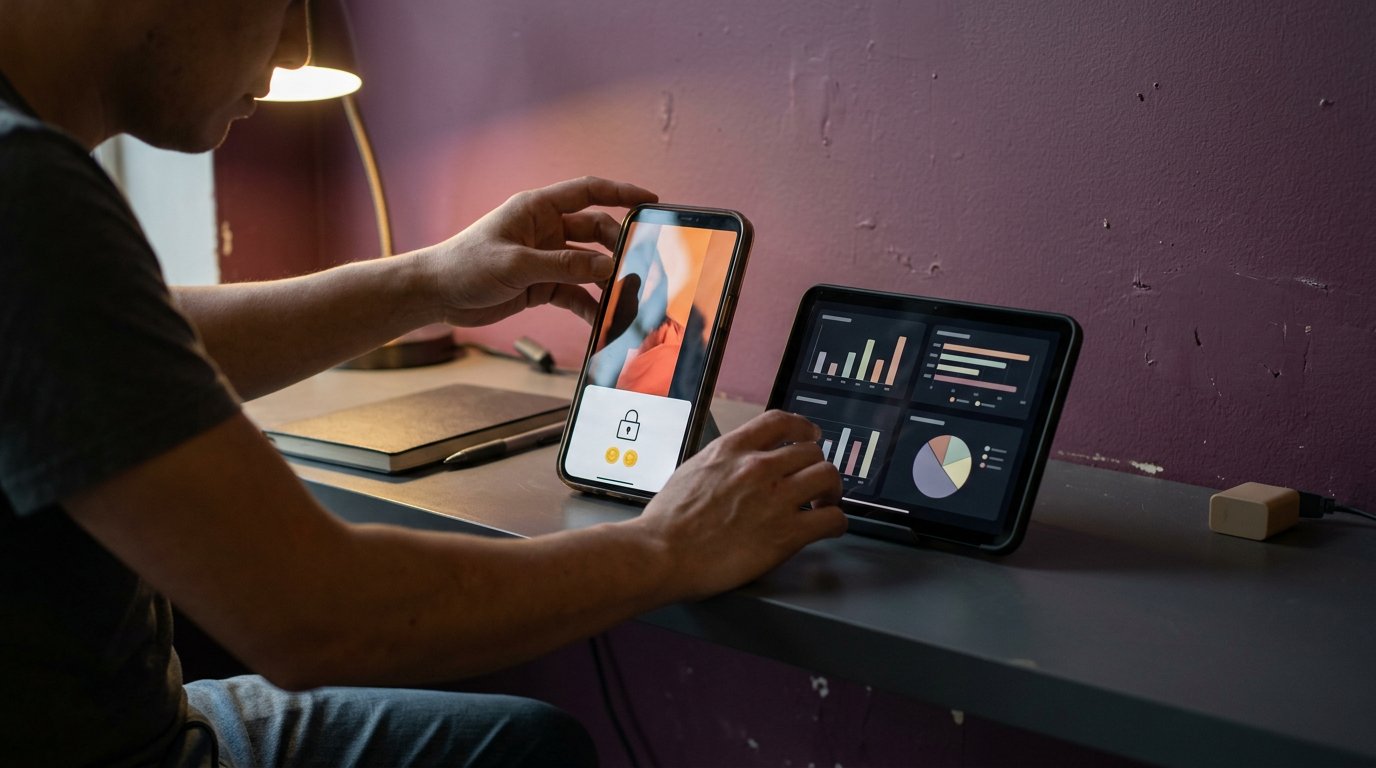
Short drama app monetization is the mix of episode purchases, subscriptions, advertising and the costs of running the service. Sensor Tower reported about $750 million in global short-drama in-app purchase revenue in Q1 2026, and more than 850 million downloads that quarter, but those IAP figures cover App Store and Google Play only — not ads, web billing or sideloaded Android. A sustainable plan still has to cover content, delivery, payment fees and the work of converting free viewing into a paid unlock.
Dramnex OS supports coins, VIP and episode unlocks on a branded web app with web billing. There is a free 7-day trial with no card. Trial storefronts show a “Made with Dramnexos.com” watermark, which comes off on a paid plan. See in-app versus web billing and how viewers pay.
Key Takeaways
- Build a full operating-cost picture before choosing custom development or a white-label platform. Compare projected costs over at least 12 months, not just launch expenses.
- Use free episodes to establish a story hook, then make premium episodes available through coin unlocks or other purchase options.
- Combine episode purchases with subscriptions and advertising to reach both paying viewers and those who watch without buying.
- Set subscription and coin-pack choices around viewing habits, then use analytics to see which options keep viewers watching and purchasing.
Table of contents
- What does it cost to run a short drama app?
- How do transactional purchases for exclusive episodes work?
- How do hybrid monetization models work?
- What do US short-drama subscription and coin-pack prices look like?
- How Dramnex OS handles monetization and payouts
What does it cost to run a short drama app?
Budget for more than the app build. A short drama platform also carries streaming, content licensing, payment processing, customer support, and user acquisition costs. Custom development for a ReelShort-style app can take 9-12 months, while a white-label platform comparison lists a 2-week launch time. Those timelines affect when you can test revenue strategies, but they don’t show the full operating cost.
Compare projected total costs over at least 12 months. Separate one-time setup from recurring platform charges, content licensing, app maintenance, and acquisition spending. Then map each cost to a revenue source. For example, episode unlocks can earn directly from viewers, while advertising can generate revenue from viewers who don’t purchase. A lower launch cost alone won’t tell you which model leaves more room to operate.
For advertising, assess the formats a drama platform supports: rewarded video, video placements, banners, and sponsored campaigns. A 30-second rewarded ad can offer an episode unlock in exchange for viewing. Check whether the ad setup supports VAST and VMAP standards for third-party ad-server integration. Avoid placing interstitial ads mid-episode; interruptions can disrupt viewing and increase churn.
For US consumer protection and subscription planning, display purchase terms, renewal details, cancellation steps, and what each unlock includes. Requirements depend on the offer and user location, so make disclosures clear in the purchase flow. App store fees and taxes also affect net revenue. Model store charges using the applicable store terms and account for taxes based on transaction details and location.
Aggressive paywalls and repeated microtransactions can frustrate viewers, weaken trust, and push them away before a story pays off. Use a clear sample, a visible unlock price, and a natural cliffhanger instead. Compare providers by the features that support those steps: coin packs, VIP access, episode unlocks, analytics, and ad-server connections. Review those tools alongside the 12-month cost model, not as a disconnected feature checklist.
How do transactional purchases for exclusive episodes work?
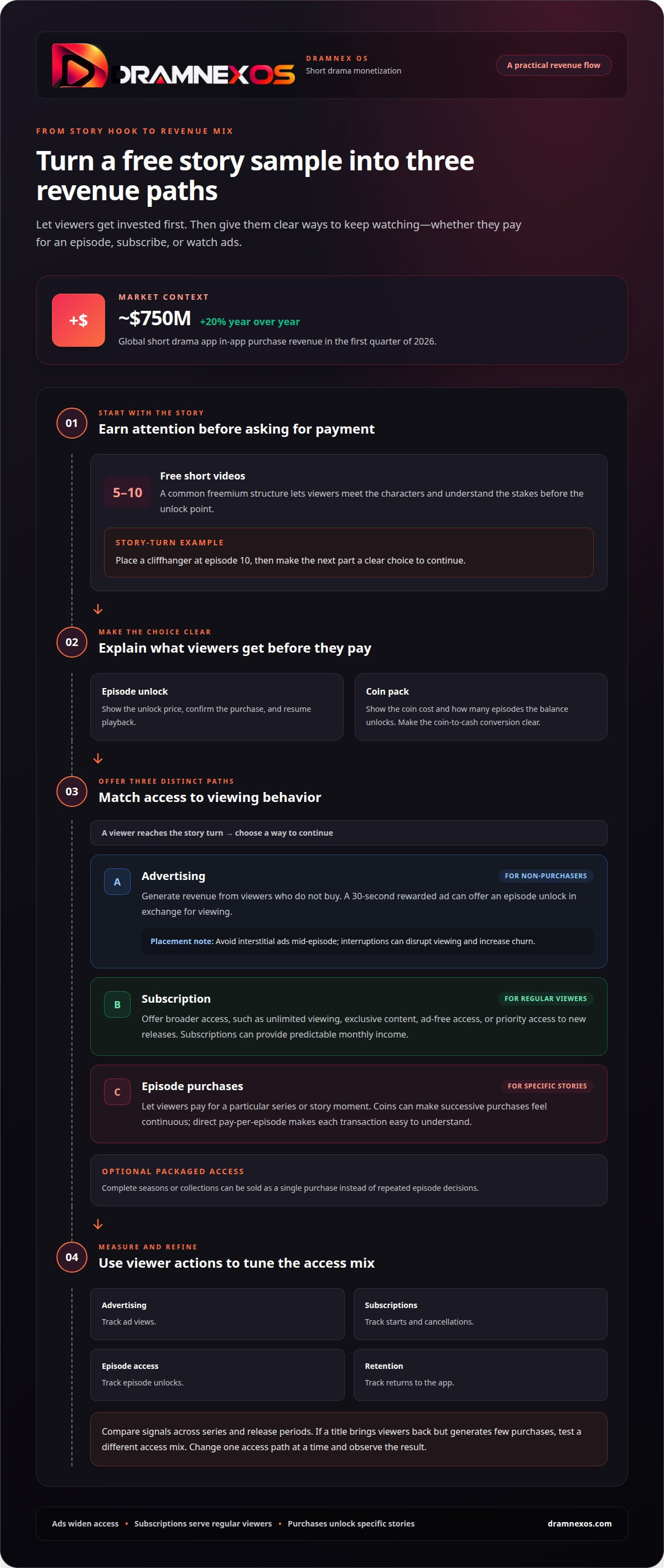
Give viewers a reason to sample a series before asking them to pay. A common freemium structure makes the first 5-10 short videos free, then places an unlock point at a story turn. One example sets a cliffhanger at episode 10. The audience has time to meet the characters and understand the stakes before choosing whether to continue.
Virtual coins turn the choice into a repeatable purchase flow: viewers buy a coin pack, then use coins to unlock a premium episode or continue a series. Show the coin cost before playback stops and make clear how many episodes the balance unlocks. An unclear conversion between coins and cash creates friction just when viewers want to keep watching.
Direct pay-per-episode access is simpler: show the unlock price, confirm the purchase, and resume playback. Coins can make successive purchases feel like one continuous viewing journey, while direct payment makes each transaction easy to understand. Either way, explain what viewers receive before they pay.
Subscriptions offer a different trade-off. They can bundle unlimited viewing, exclusive content, ad-free access, or priority access to new releases. A viewer following one series may prefer an episode unlock, while regular viewers may value broader access. You can also sell complete seasons or collections as a single purchase, giving viewers a defined package instead of repeated decisions.
Use episode performance to refine the paywall. Track where viewers stop, whether they unlock the next episode, and whether they return. If a cliffhanger prompts a purchase but viewers leave afterward, the next episode may not deliver enough payoff. Keep the free sample compelling, explain unlock terms plainly, and place exclusive content where story momentum makes the purchase feel earned. Tie transactions to the entertainment, not just the interruption.
How do hybrid monetization models work?
One revenue stream leaves a drama app exposed when viewer behavior shifts. A hybrid model combines advertising, subscriptions, and episode purchases, with each serving a different audience. In the first quarter of 2026, Sensor Tower reported about $750 million in global short-drama in-app purchase revenue, up 20% year over year (App Store and Google Play IAP only; it excludes ads, web billing, and sideloaded Android). That trend makes paid access a strong component, not the only one.
Ads can earn revenue from viewers who do not purchase. Subscriptions can provide predictable monthly income, while pay-per-episode purchases let viewers pay for specific series or story moments. Ads widen access, subscriptions suit regular viewers, and episode payments capture interest in particular content. Use all three only when each has a clear role in the viewing experience.
Set the format at launch. For example, let viewers sample a series, offer episode purchases to those who want to continue, and reserve a subscription for broader access. Place advertising where it does not interrupt the story. This gives viewers a choice without forcing everyone into the same payment path.
Review performance by revenue stream. Track ad views, subscription starts and cancellations, episode unlocks, and returns to the app. Compare these signals across series and release periods. If a title brings viewers back but generates few purchases, test a different access mix. If a partner campaign attracts new viewers, measure whether they watch beyond the first episode before expanding that format.
Keep the development plan aligned with the model. Your platform needs to support each selected payment option, explain access clearly, and report results by content. A practical sequence is to launch with a defined mix, observe viewer actions, and adjust one access path at a time. This makes short drama app monetization a series of testable choices, not a fixed formula for every growing catalogue.
What do US short-drama subscription and coin-pack prices look like?
US short drama apps use weekly and monthly VIP plans alongside coin packs for episode unlocks. These are market examples, not universal rates. The right mix depends on what VIP access includes and how often viewers watch.
Make subscription value easy to compare with individual purchases. A weekly plan may suit viewers following a new release, while a monthly plan can fit regular viewing across several series. Specify whether VIP includes unlimited viewing, exclusive content, an ad-free experience, or priority access to releases. Avoid vague labels that leave viewers unsure what their payment unlocks.
Coin packs need equally clear pricing. Set the coin cost for each episode, then show how much access each pack provides before purchase. For example, label a pack by the number of episode unlocks it covers instead of presenting coins as an unexplained balance. Show the exchange at checkout and explain what happens to leftover coins. This helps viewers assess the purchase without doing conversion math.
Test pack sizes against viewing patterns. A small pack may suit someone sampling a series; a larger pack may work for a viewer watching several episodes in one session. Compare purchases, abandoned checkouts, and subsequent unlocks. If viewers buy coins but do not use them, adjust the pack structure or clarify the unlock process. Do not assume the largest pack is best.
For a clear pricing screen, present subscription terms and coin options separately. State what access each option provides, then show the next step before payment. This lets viewers compare recurring access with episode-by-episode control. To build these payment paths into a branded streaming app, explore platform plans for app monetization.
How Dramnex OS handles monetization and payouts
Viewers get a branded web app they can install from the browser as a PWA. Dramnex OS does not provide native iOS or Android apps, and it does not list apps on the App Store or Google Play. There is a free 7-day trial with no card. Trial storefronts show a “Made with Dramnexos.com” watermark, which comes off on a paid plan. Plans are Creator at $49/month, Starter at $149.99/month, Launch at $399/month and Studio at $999/month, plus a 5% platform fee on collected viewer payments (0% during the trial). See current pricing. Viewer payments go to the operator’s Stripe account once Stripe is connected. Until then, Dramnex OS can collect payments and pay out by Wise (including to a Pakistani bank in PKR), Payoneer, PayPal, or bank transfer. Stripe’s processing fee is separate.
You can start a free 7-day trial, open the self-serve demo, or browse finished series on the content marketplace.
Related reading
FAQ
Frequently asked questions
How are short drama apps performing in 2026?
Sensor Tower reported about $750 million in global short-drama in-app purchase revenue in Q1 2026, up 20% year over year, more than 850 million downloads that quarter, and about 25 minutes of average daily time spent by April 2026. Those IAP figures cover App Store and Google Play only.
How does the free-to-paid monetization funnel work?
Viewers discover a title, watch a free run of episodes, then hit a paywall and either buy coins, start a VIP plan, or leave. Measure the share who start, the share who reach the paywall, and the share who make a first purchase. Do not rely on unsourced “Day-7 value” rules of thumb.
What ad formats work best in short drama apps?
Rewarded video, in-feed placements and, in some apps, banners or sponsored campaigns each suit a different moment. The “best” format is the one that funds the service without wrecking completion. Test placements against completion and purchase rates.
Why do viewers pay for short dramas?
Usually to continue a story after a cliffhanger, to skip ads, or to unlock a title they already care about. A clear price and a reason to continue matter more than a complicated reward loop.
What are the main monetization models for short drama apps?
Coin or episode unlocks, VIP subscriptions, advertising, and hybrid models that combine them. Web billing and store IAP are payment rails, not models: they change fees and rules, not the underlying offer.
How long does a custom app take versus a white-label launch?
Custom development is often quoted in a range of many months; some white-label vendors advertise about two weeks. Those are estimates, not guarantees. A custom web and mobile streaming MVP is often put at about five to eight months before content and marketing.
Newsroom by email
Get new articles in your inbox
Guides on launching and monetising your vertical-drama business. Confirm your address once, and we’ll email you when a new article is published.
Launch your own
Your own branded streaming app, live in minutes
Dramnexos is the white-label streaming operating system for vertical drama: your brand, your domain, coins, VIP and episode unlocks — with a free storefront to start and a licensing marketplace for finished series.