
Home › Newsroom › monetisation
monetisation
Vertical Video OTT Platforms and How Monetization May Work
A vertical video OTT platform is designed for portrait, mobile-first viewing, often used for microdramas. Monetization usually comes from subscriptions, paid episode unlocks, advertising, or a mix — timed so discovery is easy and the paywall still has a reason to exist.
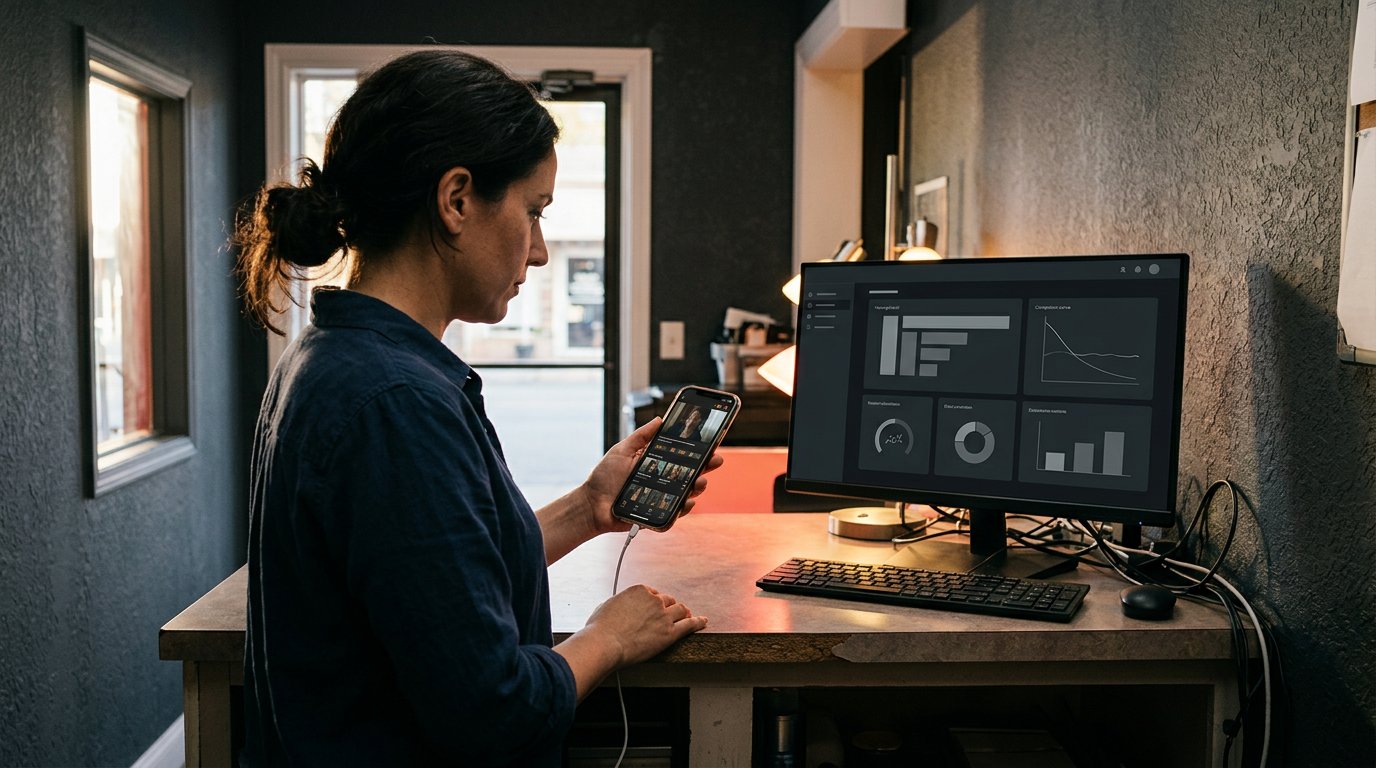
A vertical video OTT platform is a streaming service designed for portrait, mobile-first viewing, often used for microdramas with short episodes and a continuous feed. Monetization usually comes from subscriptions, paid episode unlocks, advertising, or a mix of those, timed so discovery is easy and the paywall still has a reason to exist. Downloads and watch time show attention; they do not, by themselves, prove a title will earn.
Dramnex OS is a branded web app for short drama, with coins, VIP and episode unlocks — not a native store app. There is a free 7-day trial with no card. Trial storefronts show a “Made with Dramnexos.com” watermark, which comes off on a paid plan. For the wider payment mix, see how viewers pay in the micro-drama business model.
Key Takeaways
- Design portrait viewing as a native experience, not a landscape video cropped to fit. Framing and feed navigation shape how each story lands.
- Use short serialized stories to connect quick discovery with deeper viewing. Episode structure can shape what viewers choose to unlock.
- Match revenue mechanics to viewer intent. Subscription access, paid episodes, and advertising each create a different path from attention to income.
- Choose between adding a feed to an existing service and building a separate branded app based on how distinct the audience and business model are.
Table of contents
- How can microdramas use a platform’s vertical-video features?
- Why might a service keep a vertical-video feed ad-free at first?
- How can a vertical video platform be monetized?
- What is a vertical video OTT platform?
- How Dramnex OS monetizes a vertical-drama storefront
How can microdramas use a platform’s vertical-video features?
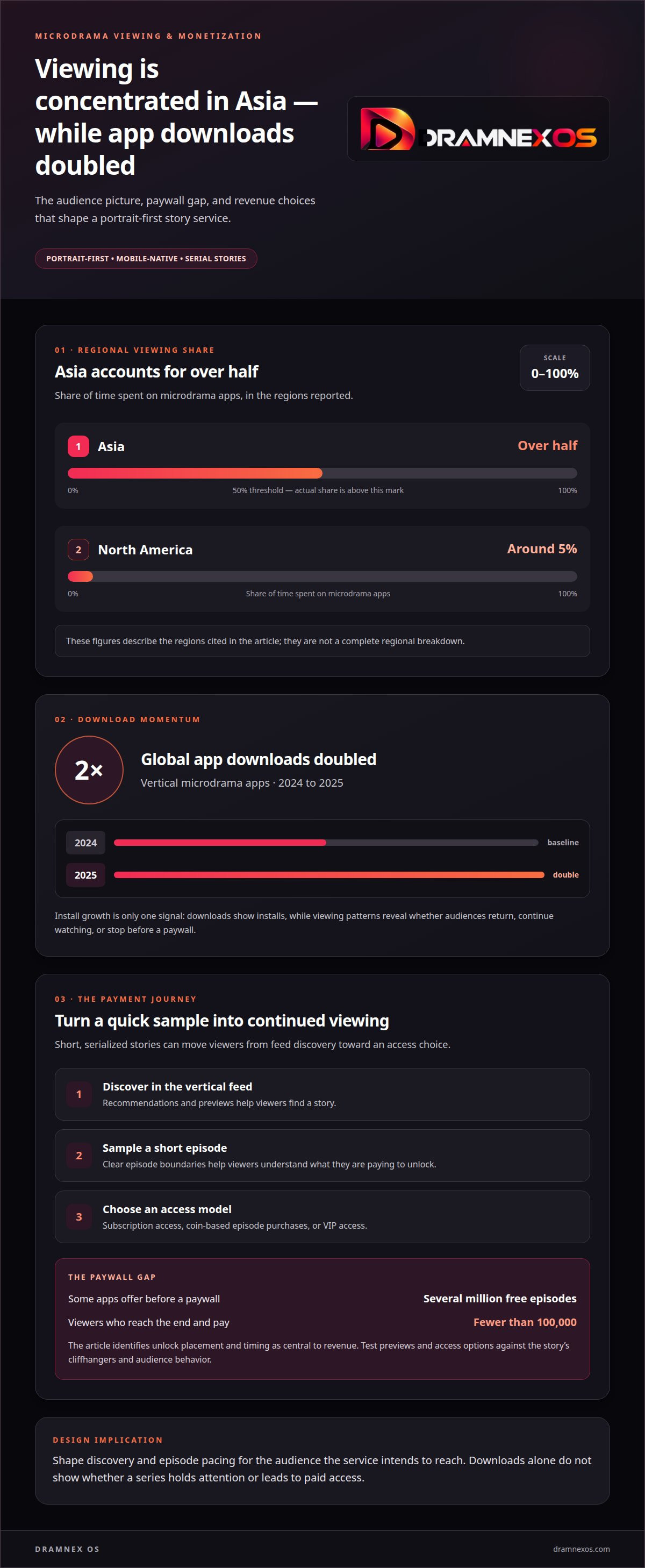
Microdramas fit a phone-first format: short, serialized stories designed for portrait viewing. Global downloads of vertical microdrama apps doubled from 2024 to 2025, while North America represented around 5% of viewing time on these apps.
How do episode monetization and subscription paywalls work?
Episode monetization charges viewers to unlock installments, while subscription paywalls provide access through recurring memberships. Microdrama episodes typically last a couple of minutes, so clear episode boundaries help viewers sample a story and understand what they’re paying for.
Many apps give away a run of free episodes before a paywall, and only a fraction of viewers reach the paid episodes and buy. That gap makes the placement and timing of an unlock central to revenue. Operators can test free previews, coin-based episode purchases, or VIP access, then compare which approach best fits the story’s cliffhangers and audience behavior.
What do app downloads and viewing patterns actually show?
Downloads count installs; viewing patterns show whether audiences return, continue watching, or stop before a paywall. The distinction matters because a high install count alone cannot show whether a series holds attention.
Episodes built for phones can fit brief viewing moments and a vertical feed. North America accounted for around 5% of time spent on microdrama apps, while Asia accounted for over half. That split points to a practical decision: shape discovery and episode pacing for the audience each service aims to serve, rather than assuming one viewing pattern travels everywhere.
Brand sponsorships can feature a product within a story, such as a recognizable drink on a character’s table, or sponsor an episode in the feed. Keep placements relevant to the scene and label paid promotions clearly. A product that disrupts the plot can weaken the story rather than help a brand connect with viewers.
Production economics depend on scripts, cast, locations, shooting schedules, and how efficiently a team creates episodes. Ad spend is a separate decision: it can attract an audience, but installs need to lead to continued viewing or paid access to support the investment. Frame for portrait from the start, since cropping landscape footage can remove important action.
The best platform depends on the intended audience and business model. A service built around discovery needs a strong vertical feed; an episodic drama service needs reliable episode access and payment options. Compare features against the content format and viewing journey, not a generic ranking.
In the United States, secure documented rights to scripts, performances, music, and footage before distribution. Consider how permissions and privacy practices apply to the people and data involved. These steps address key licensing, copyright, and privacy risks; a platform feature does not grant permission to use someone else’s work.
Why might a service keep a vertical-video feed ad-free at first?
An ad-free launch gives viewers time to learn a new feed before interruptions enter the experience. For mobile audiences, early engagement depends on stories loading quickly and feeling native to the screen. Ads can come later, once the feed has a clear viewing pattern and a defined role in the service.
The delivery stack doesn’t need a new codec: vertical video can use H.264 or HEVC, delivered through HLS or DASH. A resolution ladder can include 1080x1920 and 720x1280 examples, with adaptive bitrate delivery adjusting quality to the viewer’s connection. Supporting both vertical and horizontal video means encoding and serving multiple aspect ratios.
In the United States, vertical viewing can appear as a feed or tab inside an existing streaming app, reusing its catalogue, accounts, and access rules. A standalone app is a better fit when its audience and monetization model differ from the main service. Either way, previews and recommendations help viewers find stories without searching a large catalogue.
Live vertical streams and alternate broadcasts can provide a portrait view alongside a conventional horizontal broadcast. Sports are a practical example: a mobile viewer might follow a live moment in a vertical frame while the main event remains horizontal. Viewers expect live moments to appear in the native format within seconds, so teams need a fast path from action to feed. Cropping can fail if the subject is outside the center of the original frame.
An ad-free feed also protects early viewing from interruptions while operators learn which stories hold attention. Later, in-feed ads, clickable overlays, and shoppable formats can connect advertising with engagement. The trade-off is straightforward: delay ad revenue while establishing a viewing habit, then introduce placements that fit the feed without breaking the story.
The main launch risks are fragmented viewing, weak framing, and the extra work of supporting vertical and horizontal formats. Plan the feed and encoding together, since retrofitting can add complexity. For operators weighing launch options, streaming app plans are a relevant next step.
How can a vertical video platform be monetized?
A vertical video service connects creator uploads with viewer discovery, access, and payment. Creators prepare portrait videos, add titles and episode details, then publish them in a catalogue or feed. Viewers find clips through recommendations, watch previews, and continue to full episodes. For operators, the revenue model determines what follows discovery: an ad, subscription prompt, or episode unlock.
Subscriptions and pay-per-episode payments suit serialized stories with clear continuation points. A free preview can introduce an episode, then a paywall can offer continued access. Coins, VIP access, and individual unlocks create different payment paths. Omdia has projected about $1.5 billion in US microdrama consumer spending in 2026, including subscriptions and per-episode payments. That projection points to paid access as a serious model, not a guarantee for every title.
Advertising can monetize viewing without charging each viewer directly. In-feed ads, clickable overlays, shoppable video, and engagement-driven placements keep the message within the screen experience. Vertical ads are described as commanding higher CPMs than standard pre-roll, but actual returns depend on audience response, ad delivery, and placement. Server-side and dynamic ad insertion can place ads within streams. Keep the subject and story context in view: an interruption at a cliffhanger may feel different from a brief placement between episodes.
Creators can earn through licensing deals or revenue-sharing arrangements, depending on platform terms. Before uploading, organize each video with its title, episode order, artwork, and rights information. Then publish it for review, set access rules, and connect the chosen payment or advertising model. Clear episode metadata helps viewers follow a series instead of landing on a random installment.
The practical takeaway: use discovery to attract viewers, then match the payment moment to their intent. A free clip can lead to an episode, and a paid episode can lead to a subscription. Track viewing, unlocks, and ad engagement separately to see whether revenue comes from the story, the access model, or the advertising around it.
What is a vertical video OTT platform?
A vertical video OTT platform delivers portrait video through an internet-based service, rather than a scheduled broadcast channel. Its content uses a 9:16 frame, while the operator manages the viewing experience, catalogue, and access. For example, a drama service can group episodes into series and present each story through a dedicated app or storefront.
Think of it as a connected system, not just a video player. The operator organizes video files and episode details, makes them easy to discover, controls access, and uses platform data to understand viewing. A practical launch sequence starts with the catalogue structure, then connects playback, viewer access, and the chosen revenue model.
Portrait format changes how viewers use the interface. A mobile feed supports individual attention, quick discovery, and one-thumb navigation. A television experience needs different choices, such as remote-friendly controls, feed-based layouts, and dynamically loaded content. The screen affects more than the video frame: it changes how people browse and watch.
There are two common product choices. Many streaming services place a vertical feed inside an existing app, reusing its catalogue, accounts, and access rules. A standalone service makes more sense when its audience and monetization model differ from the existing product. This distinction helps define the app experience before content and technical decisions are locked in.
For a launch, map the service around a specific viewer journey: discover a series, open an episode, and continue watching. Then decide which parts need to work across mobile and connected TV. If you’re planning the commercial setup, review streaming app launch options in light of your format and audience.
How Dramnex OS monetizes a vertical-drama storefront
Viewers get a branded web app they can install from the browser as a PWA. Dramnex OS does not provide native iOS or Android apps, and it does not list apps on the App Store or Google Play. There is a free 7-day trial with no card. Trial storefronts show a “Made with Dramnexos.com” watermark, which comes off on a paid plan. Plans are Creator at $49/month, Starter at $149.99/month, Launch at $399/month and Studio at $999/month, plus a 5% platform fee on collected viewer payments (0% during the trial). See current pricing. Viewer payments go to the operator’s Stripe account once Stripe is connected. Until then, Dramnex OS can collect payments and pay out by Wise (including to a Pakistani bank in PKR), Payoneer, PayPal, or bank transfer. Stripe’s processing fee is separate.
You can start a free 7-day trial, open the self-serve demo, or browse finished series on the content marketplace.
Related reading
FAQ
Frequently asked questions
What is a vertical video OTT platform?
It is a streaming service built for portrait video on a phone, often with a continuous feed and short episodes. Microdramas are a common use, but the same format can carry other short, serialized titles.
How real is the microdrama boom?
Category growth is real in published forecasts and tracker reports, including Deloitte’s micro-series outlook and Omdia’s US spending projection, but those figures describe a market, not a guarantee for one title. A service still needs rights, a clear price and viewers who return.
Should vertical video be a separate app or a mode inside one?
Either can work. A dedicated app suits a catalogue that is almost entirely portrait. A mode inside a broader service suits a mixed catalogue. Dramnex OS is a dedicated short-drama web app, not a feature bolted onto a general TV product.
Why is vertical video more engaging on mobile?
Portrait video fills a phone screen without rotation, which suits short, serialized watching. Engagement still depends on the story and the paywall, not on the frame alone.
What subscription, pay-per-view, and advertising options do these platforms offer?
Typical options are a VIP plan, coin or episode unlocks, and in-feed or rewarded ads. Omdia has projected about $1.5 billion in US microdrama consumer spending in 2026, which supports paid access as a serious model, not a promise for every title.
Does Dramnex OS include a native store app?
No. Viewers get a branded web app they can install as a PWA. Dramnex OS does not provide native iOS or Android apps or list them in the stores.
Newsroom by email
Get new articles in your inbox
Guides on launching and monetising your vertical-drama business. Confirm your address once, and we’ll email you when a new article is published.
Launch your own
Your own branded streaming app, live in minutes
Dramnexos is the white-label streaming operating system for vertical drama: your brand, your domain, coins, VIP and episode unlocks — with a free storefront to start and a licensing marketplace for finished series.